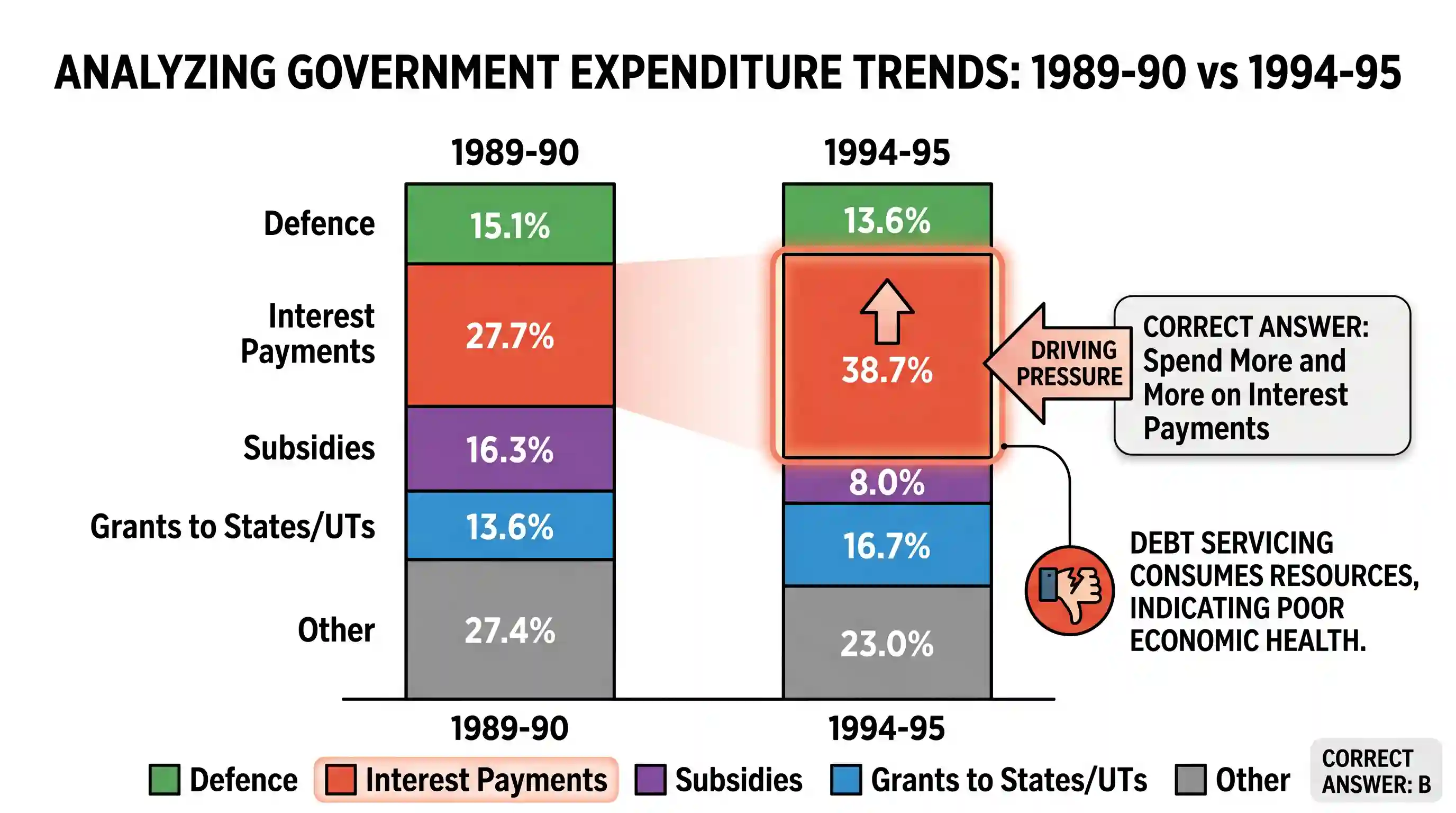
The following Table shows the percentage distribution of revenue expenditure of Government of India in 1989-90 and 1994-95: | Years | Defence | Interest | Subsidies | Grants to | | :--- | :--- | :--- | :--- | :--- | | 1989-90 | 15.1 | 27.7 | 16.3 | 13.6 27.4 | | 1994-95 | 13.6 | 38.7 | 8.0 | 16.7 23.0 | Based on this table, it can be said that the Indian economy is in poor shape because the Central Government continues to be under pressure to [Years | Defence | Interest | Subsidies | Grants to ; | | Payments | | States/Us Other ; 1989-90 | 15.1 | 27.7 | 16.3 | 13.6 27.4 ; 1994-95 | 13.6 | 38.7 | 8.0 | 16.7 23.0]

- Areduce expenditure of defence
- Bspend more and more on interest paymentsCorrect
- Creduce expenditure on subsidies
- Dspend more and more as grants-in-aid to State Governments/Union Territories
Explanation
The correct answer is B because the table shows a significant and sharp increase in the percentage of revenue expenditure allocated to interest payments. In 1989-90, interest payments accounted for 27.7 percent of the expenditure, but by 1994-95, this figure rose to 38.7 percent. This indicates that a large and growing portion of the governments revenue is being consumed by debt servicing rather than being used for productive investments or developmental activities. In the context of the Indian economy during that period, this rising debt burden was a primary indicator of fiscal strain and poor economic health. While other expenditures like subsidies and defence decreased or showed smaller changes, the massive jump in interest payments represents the most critical pressure point on the budget.
Related questions
More UPSC Prelims practice from the same subject and topic.
- Prelims 1996GS1economy
A redistribution of income in a country can be best brought about through
- Prelims 1996GS1economy
Which one of the following is correct regarding stabilization and structural adjustment as two components of the new economic policy adopted in India?
- Prelims 1996GS1economy
Assertion (A): An important policy instrument of economic liberalization is reduction in import duties on capital goods. Reason (R): Reduction in import duties would help the local entrepreneurs to im…
- Prelims 1996GS1economy
One of the important goals of the economic liberalisation policy is to achieve full convertibility of the Indian rupee. This is being advocated because
- Prelims 1996GS1economy
The emerging trading blocs in the world, such as NAFTA, ASEAN and the like, are expected to
- Prelims 1996GS1economy
Which of the following were the aims behind the setting up of the World Trade Organization (WTO)? I. Promotion of free trade and resource flows across countries. II. Protection of intellectual propert…