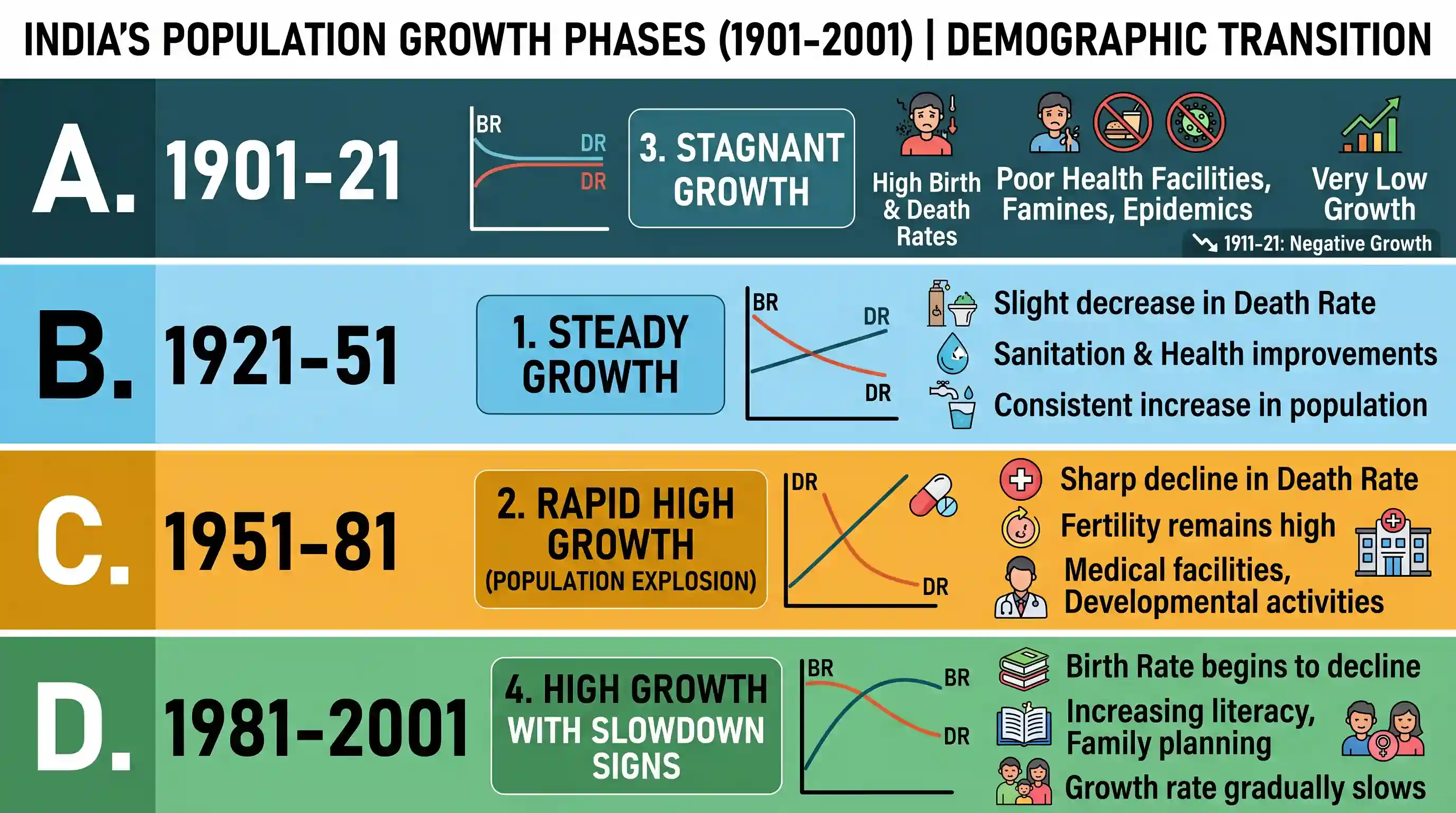
India’s population growth during the 29th century can be classified into four distinct phases. Match List I (Period) with List II (Phase) and select the correct answer using the using the codes given below the lists: List I List II (Period) (Phase) A. 1901-21 1. Steady growth B. 1921-51 2. Rapid high growth C. 1951-81 3. Stagnant growth D. 1981-2001 4. High growth with definite signs of slowdown Codes:

- A3 1 4 2
- B1 3 2 4
- C3 1 2 4Correct
- D1 3 4 2
Explanation
The correct answer is C because it accurately reflects the demographic transition phases of India during the 20th century.
A matches with 3: The period from 1901 to 1921 is known as the stage of stagnant or stationary growth. During this time, birth rates and death rates were both very high due to poor health facilities, food shortages, and epidemics, resulting in a very low growth rate. In fact, 1911 to 1921 recorded a negative growth rate.
B matches with 1: The period from 1921 to 1951 is known as the period of steady growth. Improvements in sanitation and health slightly brought down the mortality rate, while birth rates remained high, leading to a consistent increase in population.
C matches with 2: The period from 1951 to 1981 is referred to as the phase of population explosion or rapid high growth. After independence, developmental activities and significant improvements in medical facilities caused a sharp decline in death rates while fertility remained high.
D matches with 4: From 1981 to 2001, the population continued to grow, but the rate of growth began to decline. This phase is characterized by high growth with definite signs of slowing down due to increasing literacy, better family planning, and a gradual decline in birth rates.
Related questions
More UPSC Prelims practice from the same subject and topic.
- Prelims 2002GS1geography
The main reason for unrest and violence in Zimbabwe in recent years is due to
- Prelims 2002GS1geography
HINDALCO, an aluminium factory located at Renukut owes its site basically to
- Prelims 2002GS1geography
Consider the following countries of South Asia
- Prelims 2002GS1geography
With reference to Indian transport systems, consider the following statements: 1. Indian railways system is the largest in the world. 2. National Highways cater to 45 per cent of the total road transp…
- Prelims 2002GS1geography
Consider the following countries: 1. Brazil 2. Indonesia 3. Japan 4. Russia What is the descending order of the size of the following countries population wise?
- Prelims 2002GS1geography
Match List I (Ethnic Community) with List II (Country) and select the correct answer using the codes given below the lists: List I (Ethnic community) List II (Country) A. Apatani 1. China B. Dayak 2. …