Consider the following statements: 1. Non-function of lachrymal gland is an important symptom of deficiency of Vitamin A. 2. Deficiency of Vitamin B1 can lead to indigestion and heart enlargement. 3. Vitamin C deficiency can lead to pain in the muscles. 4. Deficiency of Vitamin D causes increased loss of Ca++ in urine. Which of the statements given above are correct?

- A1 and 2Correct
- B2, 3 and 4
- C1, 3 and 4
- D1, 2, 3, and 4
Explanation
The correct answer is A because of the following reasons:
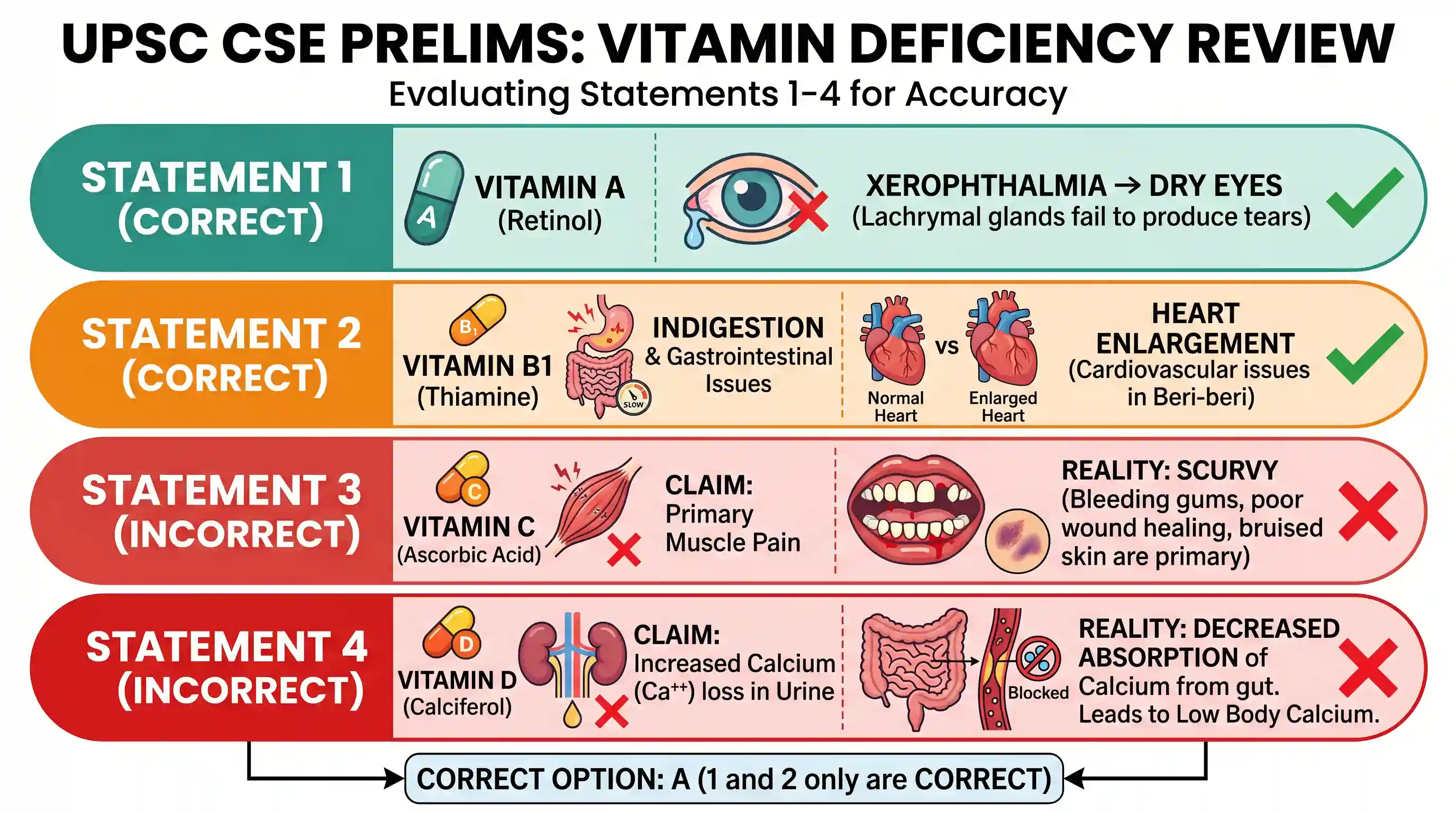
Statement 1 is correct. Vitamin A deficiency leads to Xerophthalmia, a condition where the lachrymal glands fail to produce tears, causing the eyes to become dry.
Statement 2 is correct. Vitamin B1 or Thiamine deficiency causes Beri-beri. This condition can affect the digestive system leading to indigestion and can also impact the cardiovascular system, potentially causing heart enlargement or failure.
Statement 3 is incorrect. While Vitamin C deficiency causes Scurvy, which is primarily characterized by bleeding gums and poor wound healing, muscle pain is not its primary diagnostic symptom in the context of standard nutritional science.
Statement 4 is incorrect. Vitamin D is essential for the absorption of Calcium. Its deficiency leads to decreased absorption of Calcium from the gut, not an increased loss of Calcium in the urine. In fact, Vitamin D deficiency usually results in lower levels of Calcium in the body.
Therefore, only statements 1 and 2 are accurate.
Related questions
More UPSC Prelims practice from the same subject and topic.
- Prelims 2004GS1science-and-technology
In which organ of the human body are the lymphocyte cells formed?
- Prelims 2004GS1science-and-technology
Consider the following statements: 1. Adam Osborne produced the first portable computer. 2. Ian Wilmut created the first cloned sheep. Which of the statements given above is/ are correct?
- Prelims 2004GS1science-and-technology
Param Padma, which was in the news recently, is:
- Prelims 2004GS1science-and-technology
Assertion (A): In our houses, the current in AC electricity line changes direction 60 times per second. Reason (R): The frequency of alternating voltage supplied is 60 hertz.
- Prelims 2004GS1science-and-technology
Assertion (A): Fatty acids should be a part of the balanced human diet. Reason (R): The cells of the human body cannot synthesize any fatty acids.
- Prelims 2004GS1science-and-technology
Match List-I (Institute) with List-II (Located at) and select the correct answer using the codes given below the Lists: List-I List-II (Institute) (Located at) A. Indian Institute of Geomagnetism 1. C…