With reference to the institution of Banking Ombudsman in India, which one of the statements is not correct?

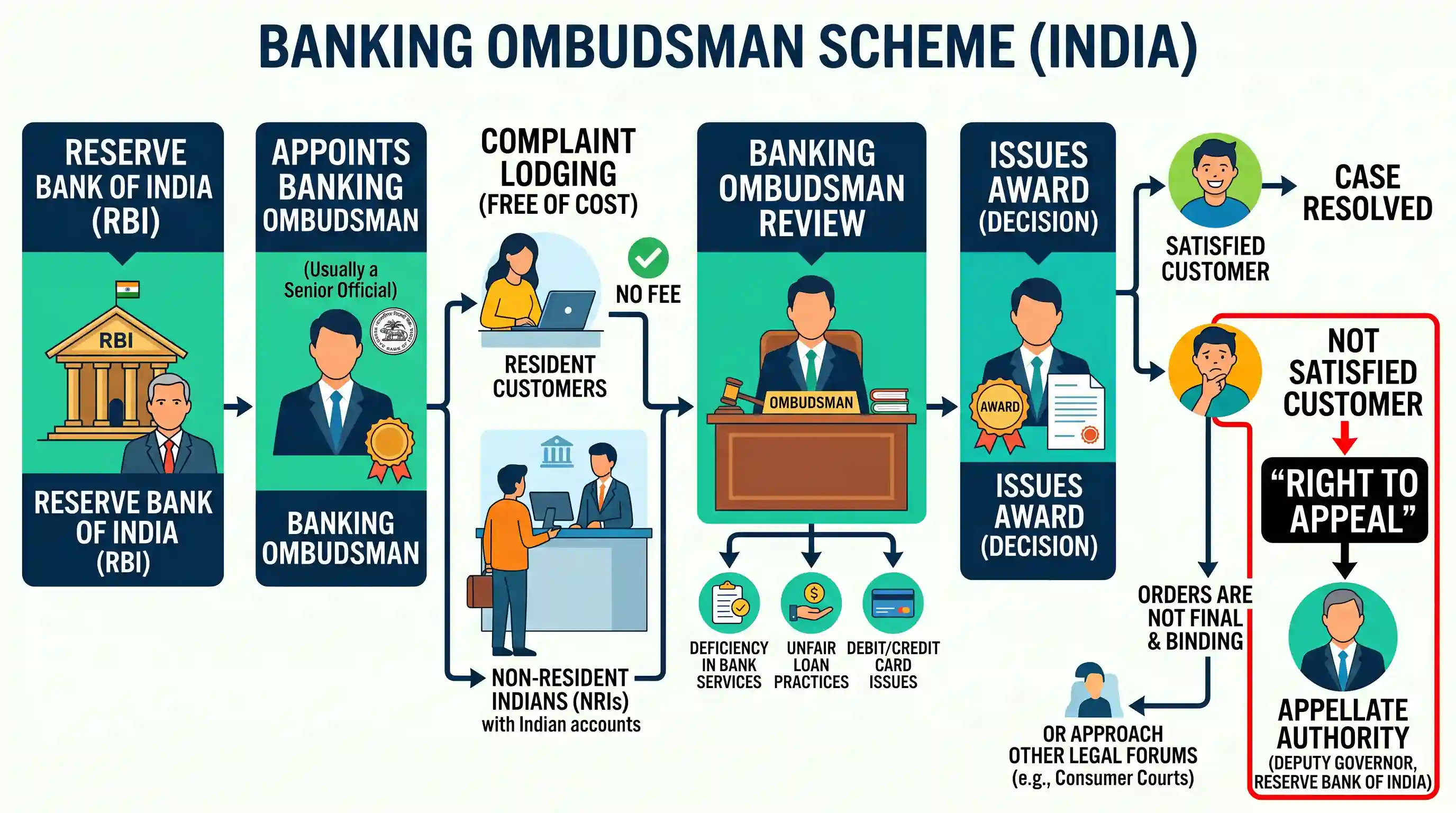
- AThe Banking Ombudsman is appointed by the Reserve Bank of India
- BThe Banking Ombudsman can consider complaints from Non-Resident Indians having accounts in India
- CThe orders passed by the Banking Ombudsman are final and binding on the parties concernedCorrect
- DThe service provided by the Banking Ombudsman is free of any fee
Explanation
The correct answer is C because the orders passed by the Banking Ombudsman are not final and binding. If a customer is not satisfied with the decision, they have the right to appeal against the award before the Appellate Authority, which is usually the Deputy Governor of the Reserve Bank of India. Additionally, the customer maintains the right to approach any other legal court or forum if they are unhappy with the outcome.
The other statements are correct: the Ombudsman is indeed appointed by the RBI, the service is provided free of cost to complainants, and it covers grievances from Non-Resident Indians regarding their accounts in India.
Related questions
More UPSC Prelims practice from the same subject and topic.
- Prelims 2010GS1economy
Which of the following terms indicates a mechanism used by commercial banks for providing credit to the government?
- Prelims 2010GS1economy
With reference to the Non-banking Financial Companies (NBFCs) in India, consider the following statements:
- Prelims 2010GS1economy
Which of the following is/are treated as artificial currency?
- Prelims 2010GS1economy
In India, the interest rate on savings accounts in all the nationalized commercial banks is fixed by
- Prelims 2010GS1economy
When the Reserve Bank of India announces an increase of the Cash Reserve Ratio, what does it mean?
- Prelims 2010GS1economy
In India, which of the following is regulated by the Forward Markets Commission?