
Question 17
1. Bats
2. Bears
3. Rodents
The phenomenon of hibernation can be observed in which of the above kinds of animals?
AOptions
BSolution
Hibernation is a state of minimal activity and metabolic depression in endothermic (warm-blooded) animals. It is characterized by lower body temperature, slower breathing, and a lower metabolic rate. Animals hibernate to conserve energy during periods of limited food availability or harsh environmental conditions (typically cold winters).
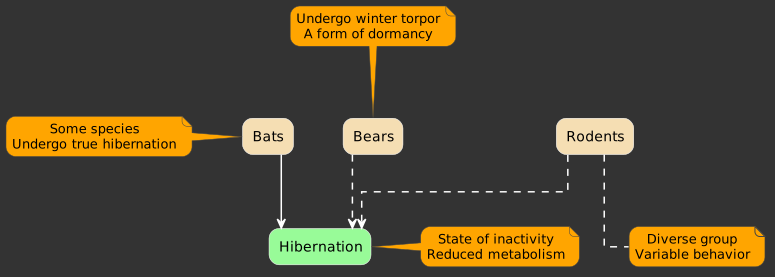
- 1. Bats: Many bat species, especially those in temperate regions, are true hibernators. They seek out caves, mines, or other sheltered places to spend the winter in a state of torpor.
- 2. Bears: While bears are often said to hibernate, their state of torpor is not as deep as that of true hibernators (like rodents or bats). Their body temperature doesn't drop as dramatically, and they can be roused more easily. However, it is still considered a form of hibernation or winter lethargy to conserve energy during food scarcity.
- 3. Rodents: Many rodent species, such as groundhogs, hamsters, dormice, and marmots, are classic examples of true hibernators, undergoing profound physiological changes during their dormant period.
Therefore, the phenomenon of hibernation can be observed in all three kinds of animals listed.
CStrategy
For biology questions about animal behavior, understand the definitions of terms like 'hibernation', 'estivation', and 'torpor'. Recall common examples for each to apply the concepts.
DSyllabus Analysis
This question falls under General Science (Biology), specifically animal adaptations and physiological processes.
EQuestion Analysis
Easy. This is a common biological fact about animal behavior. The main nuance is understanding that 'hibernation' can encompass a range of physiological states, including the less extreme torpor seen in bears.