
Question 22
AOptions
BSolution
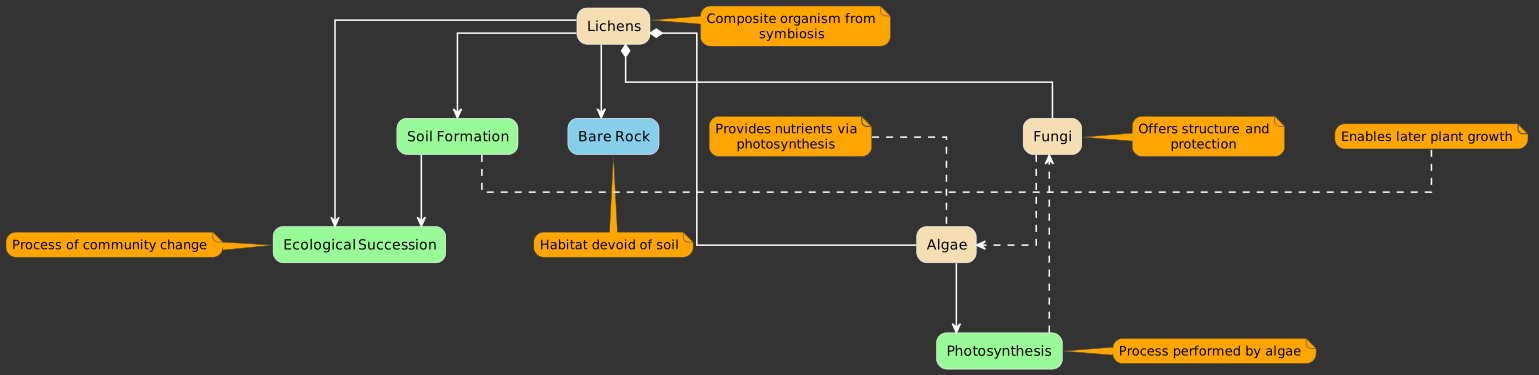
Lichens are remarkable organisms known for their ability to colonize harsh environments, including bare rock, where they play a crucial role in initiating ecological succession (primary succession).
A lichen is a symbiotic association (a close and often long-term interaction between two different biological organisms) primarily between:
- A fungus (mycobiont): This component typically provides the structural body of the lichen, protects the photosynthetic partner from desiccation, and absorbs water and minerals from the environment.
- A photosynthetic partner (photobiont): This is usually a green alga (chlorophyta) or a cyanobacterium (formerly known as blue-green algae). The photobiont produces food (sugars) through photosynthesis, providing nutrients to the fungus.
This mutualistic relationship allows lichens to survive in extreme conditions where neither partner could thrive alone. The fungus benefits from the food produced by the alga/cyanobacterium, while the alga/cyanobacterium benefits from the protection and access to water/minerals provided by the fungus.
Options A, C, and D describe other combinations that do not accurately represent the symbiotic nature of lichens.
CStrategy
For basic biology questions, understand fundamental concepts like symbiosis and the key components of common biological entities. Memorize examples of symbiotic relationships.
DSyllabus Analysis
This question falls under General Science (Biology), specifically ecology (ecological succession) and biological interactions (symbiosis).
EQuestion Analysis
Easy. This is a very common and fundamental biological fact about lichens, frequently covered in introductory biology and ecology.