
Question 65
AOptions
BSolution
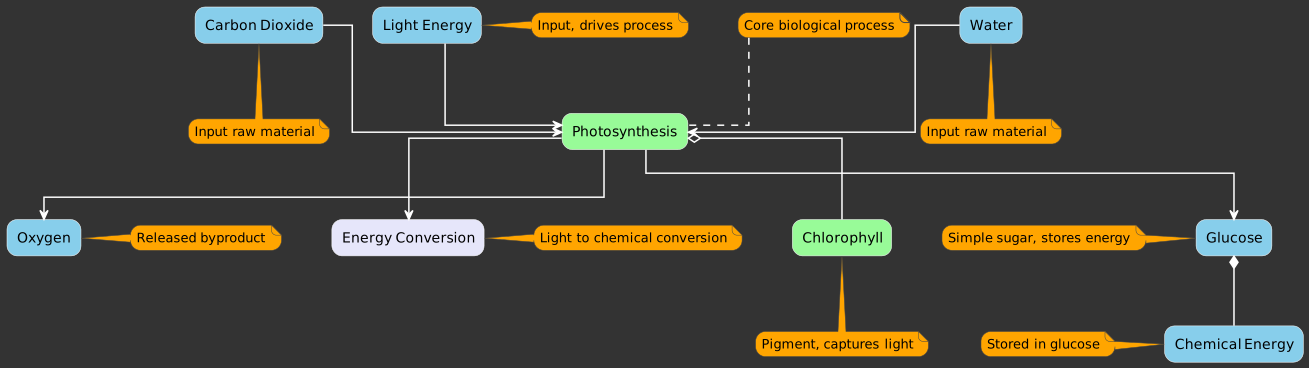
Photosynthesis is the process by which green plants, algae, and some bacteria convert light energy into chemical energy, stored in organic compounds like glucose. Let's analyze the options:
- A) Potential energy is released to form free energy: This describes processes like cellular respiration, where stored chemical energy (potential energy) in food molecules is released as usable energy (free energy) for cellular activities.
- B) Free energy is converted into potential energy and stored: This accurately describes photosynthesis. Light energy (a form of free energy from the sun) is captured and transformed into chemical energy, which is then stored in the chemical bonds of glucose molecules (potential energy).
- C) Food is oxidized to release carbon dioxide and water: This is the definition of cellular respiration, where organic food molecules are broken down (oxidized) to release energy, producing carbon dioxide and water as byproducts.
- D) Oxygen is taken, and carbon dioxide and water vapour are given out: This describes the process of respiration (or breathing in animals). In photosynthesis, oxygen is released, and carbon dioxide is taken in.
Therefore, the core process involved in photosynthesis is the conversion of free energy into stored potential energy.
CStrategy
For fundamental science questions, understand the basic definitions, inputs, outputs, and energy transformations of key biological processes. Distinguish clearly between processes like photosynthesis and respiration.
DSyllabus Analysis
This question falls under General Science, specifically Biology (Plant Physiology and fundamental biochemical processes).
EQuestion Analysis
Easy. This is a basic and fundamental concept taught in introductory biology, making it relatively straightforward.