
Question 27
AOptions
BSolution
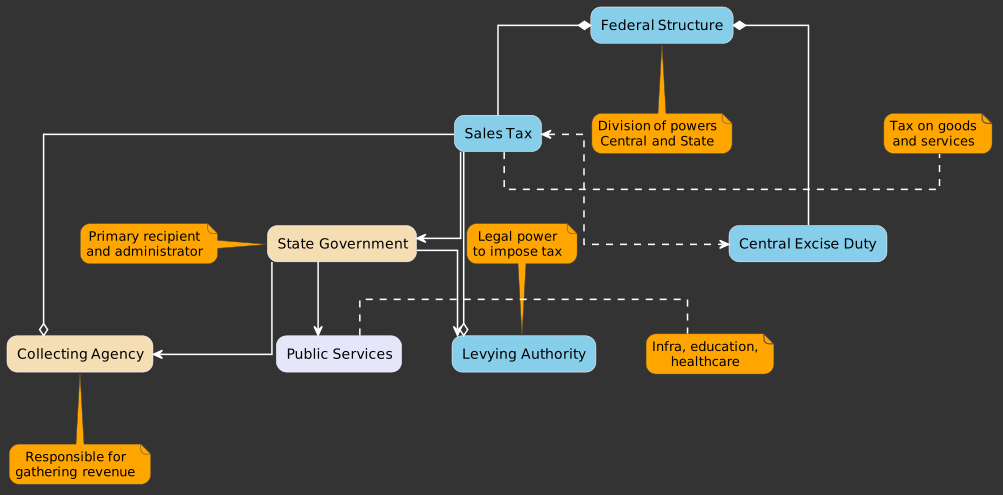
Before the introduction of the Goods and Services Tax (GST) in India (which came into effect on July 1, 2017), Sales Tax was a prominent indirect tax. Under the constitutional division of powers, the authority to levy and collect sales tax on the sale of goods within a state rested with the respective State Governments. Therefore, when a consumer purchased a commodity like toothpaste, the sales tax component of its price was both imposed by and collected for the State Government where the transaction occurred. This structure existed prior to the comprehensive overhaul of indirect taxation by GST, which subsumed sales tax and many other levies.
CStrategy
For questions on taxation, especially those related to historical tax structures or the division of financial powers, it is essential to understand which level of government (Central, State, or Local) has the authority to impose and collect specific taxes as per the Constitution. Differentiating between direct and indirect taxes and knowing the pre-GST tax regime are often key.
DSyllabus Analysis
This question falls under Indian Economy, specifically Public Finance, Taxation, and the division of financial powers between the Union and States.
EQuestion Analysis
Easy. This is a fundamental question regarding the pre-GST tax structure in India and the fiscal federalism framework.