
Question 12
1. IUCN is an organ of the United Nations and CITES is an international agreement between governments.
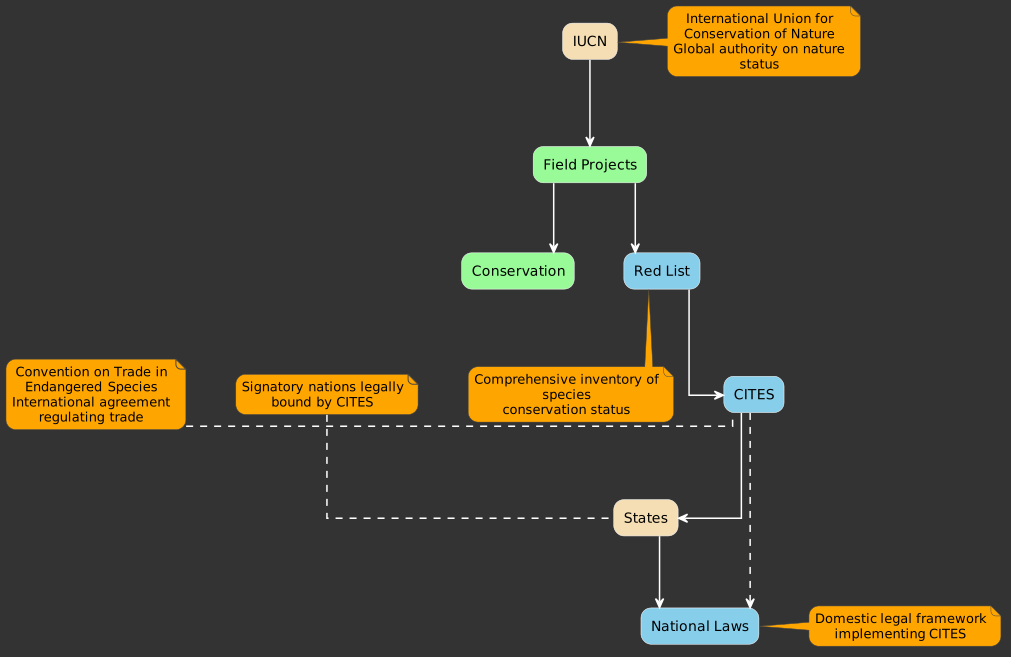
2. IUCN runs thousands of field projects around the world to better manage natural environments.
3. CITES is legally binding on the States that have joined it, but this Convention does not take the place of national laws.
Select the correct answer using the code given below.
AOptions
BSolution
1. IUCN is an organ of the United Nations and CITES is an international agreement between governments: This statement is incorrect. The International Union for Conservation of Nature (IUCN) is an independent international organization (an NGO with a unique observer status at the UN General Assembly), not an organ of the United Nations. CITES (Convention on International Trade in Endangered Species of Wild Fauna and Flora) is indeed an international agreement between governments.
2. IUCN runs thousands of field projects around the world to better manage natural environments: This statement is correct. IUCN actively engages in and supports a vast number of conservation projects globally, working with governments, NGOs, and local communities to implement conservation strategies on the ground.
3. CITES is legally binding on the States that have joined it, but this Convention does not take the place of national laws: This statement is correct. CITES is a legally binding international treaty, meaning States (Parties) that ratify it are legally obliged to implement its provisions. However, CITES itself does not replace national laws. Instead, each Party must enact its own domestic legislation to enforce CITES regulations and apply penalties for violations.
CStrategy
When dealing with international organizations and conventions, understand their fundamental nature (e.g., intergovernmental organization, NGO, UN agency), their legal status (binding vs. non-binding), and their specific mandates. Pay close attention to details like whether a body is an 'organ' of another, as this can be a key differentiator.
DSyllabus Analysis
This question falls under the Environment and Ecology section, specifically international environmental conventions and organizations.
EQuestion Analysis
Medium to Difficult. It requires precise knowledge about the structure and legal nature of IUCN and CITES, and distinguishing between them and UN organs.