
Question 89
AOptions
BSolution
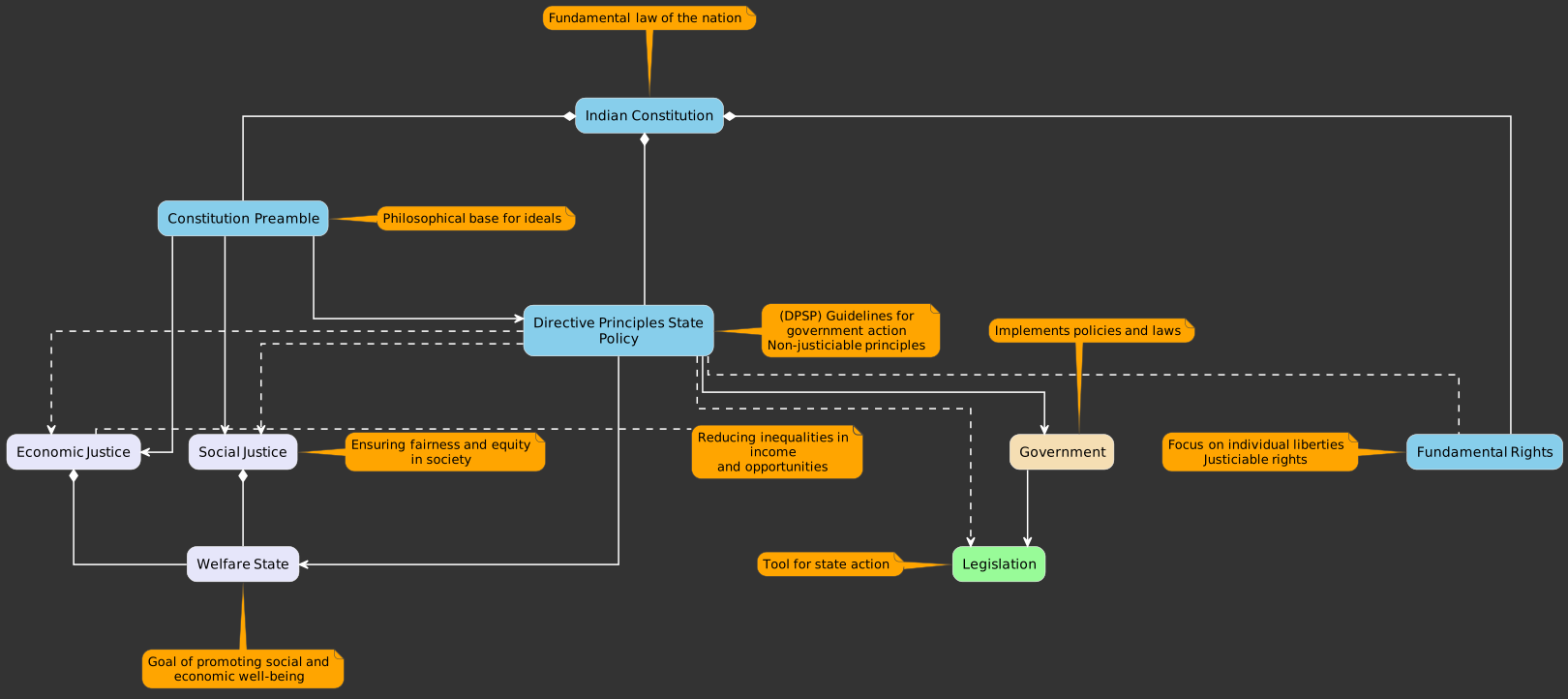
The ideal of a 'Welfare State' in the Indian Constitution is most prominently enshrined in the Directive Principles of State Policy (DPSP), contained in Part IV (Articles 36 to 51) of the Constitution. These principles are non-justiciable guidelines for the state to establish a social and economic democracy, aiming to promote the welfare of the people by securing a social order in which justice—social, economic, and political—shall inform all the institutions of national life.
While the Preamble declares India to be a 'Socialist' republic and aims for justice and equality, and Fundamental Rights protect individual liberties, the DPSP specifically lay down the positive obligations of the state to achieve socio-economic goals, thereby realizing the welfare state ideal.
CStrategy
Understand the distinct purpose and nature of different parts of the Constitution. The DPSP are directly aimed at establishing a welfare state by guiding government policies towards social and economic justice.
DSyllabus Analysis
This question is from the Indian Polity and Governance section of the UPSC Prelims syllabus, specifically on the Directive Principles of State Policy.
EQuestion Analysis
Easy. This is a fundamental concept related to the objectives and principles embedded in the Indian Constitution.