
Question 91
AOptions
BSolution
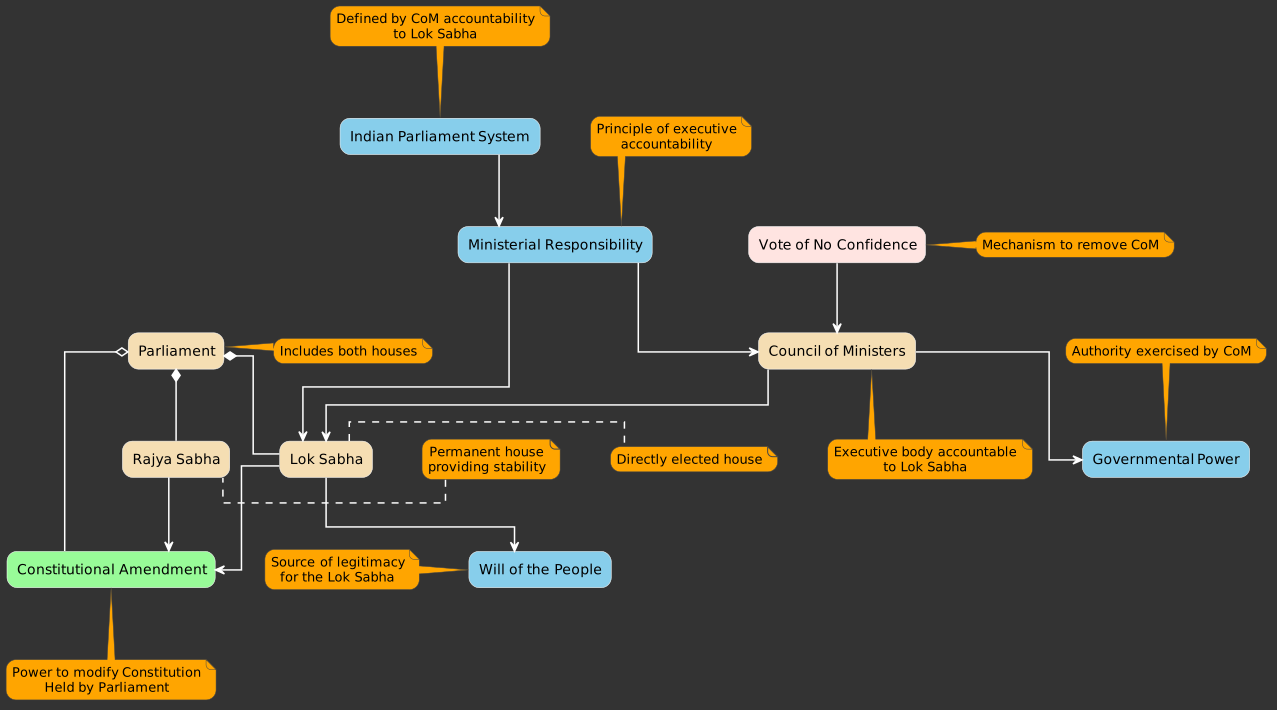
The defining characteristic and fundamental reason for India having a Parliamentary System of Government is the principle of 'collective responsibility'. This means that the Council of Ministers, headed by the Prime Minister, is collectively responsible to the Lok Sabha (the lower house of Parliament). If the Lok Sabha passes a no-confidence motion against the Council of Ministers, the entire council must resign.
- Option A (Lok Sabha elected directly by the people) is a feature of a democratic system, but not the defining characteristic of a *parliamentary* system, as presidential systems can also have directly elected legislatures.
- Option B (Parliament can amend the Constitution) is a feature of a sovereign parliament, common to many systems.
- Option C (Rajya Sabha cannot be dissolved) is a feature of the bicameral legislature, specific to India, but not the core reason for its parliamentary nature.
CStrategy
To identify the core reason for a particular system of governance, focus on the fundamental principles that distinguish it from other systems. For a parliamentary system, collective responsibility of the executive to the legislature is the cornerstone.
DSyllabus Analysis
This question is from the Indian Polity and Governance section of the UPSC Prelims syllabus, specifically on the Parliamentary System and its key features.
EQuestion Analysis
Easy. It tests a fundamental concept of parliamentary democracy.