
Question 50
1. The concept of Bodhisattva is central to Hinayana sect of Buddhism.
2. Bodhisattva is a compassionate one on his way to enlightenment.
3. Bodhisattva delays achieving his own salvation to help all sentient beings on their path to it.
Which of the statements given above is/are correct?
AOptions
BSolution
Let's analyze the statements regarding the concept of Bodhisattva in the religious history of India, particularly Buddhism:
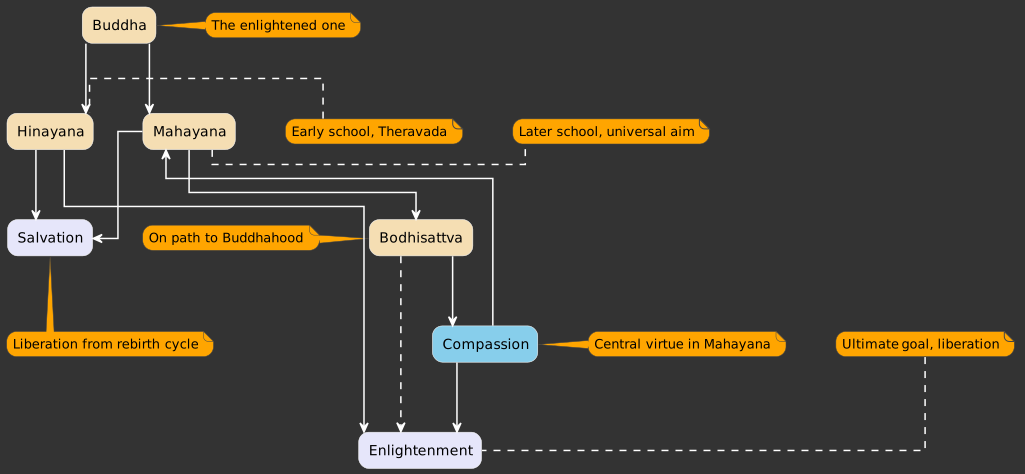
1. The concept of Bodhisattva is central to Hinayana sect of Buddhism. This statement is incorrect. The concept of a Bodhisattva, an enlightened being who postpones their own nirvana to help others achieve enlightenment, is central to Mahayana Buddhism. Hinayana (or Theravada, its surviving branch) primarily focuses on individual liberation and the ideal of the Arhat, who attains personal enlightenment.
2. Bodhisattva is a compassionate one on his way to enlightenment. This statement is correct. A Bodhisattva is someone who is aspiring to attain Buddhahood, and their path is characterized by immense compassion (karuna) for all sentient beings.
3. Bodhisattva delays achieving his own salvation to help all sentient beings on their path to it. This statement is correct. This is the defining characteristic of the Bodhisattva ideal in Mahayana Buddhism – a profound commitment to assisting others on their spiritual journey, even if it means postponing their ultimate enlightenment or nirvana.
Therefore, statements 2 and 3 are correct.
CStrategy
For questions on religious philosophy or historical sects, it is crucial to understand the core tenets and distinguishing features of each school of thought. Pay attention to which concepts are central to specific sects and differentiate them from others. Absolute statements, like 'central to Hinayana', should be carefully scrutinized.
DSyllabus Analysis
This question falls under Ancient Indian History, specifically the religious history of Buddhism, including its philosophical concepts and sectarian developments.
EQuestion Analysis
Medium. It requires a nuanced understanding of core Buddhist concepts and their association with specific sects (Hinayana vs. Mahayana).