
Question 95
AOptions
BSolution
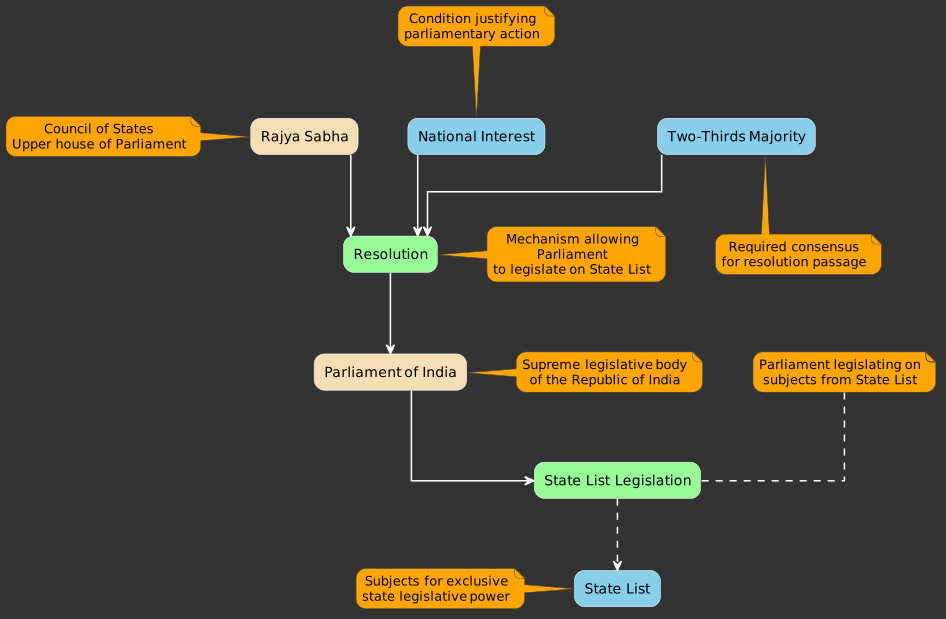
Article 249 of the Indian Constitution empowers the Parliament to legislate on any item enumerated in the State List. This power is exercised when the Rajya Sabha (Council of States) passes a resolution by a majority of not less than two-thirds of its members present and voting. Such a resolution declares that it is necessary or expedient in the national interest for Parliament to make laws with respect to any matter enumerated in the State List. This power is typically for a period of one year but can be extended by further resolutions.
It's important to note that this special power to legislate on the State List in national interest is vested specifically with the Rajya Sabha, reflecting its role in protecting the interests of the states.
CStrategy
For Polity questions involving parliamentary powers and procedures, pay close attention to which house of Parliament has the specific power, the type of majority required (simple, absolute, special), and any specific conditions or articles of the Constitution that govern it. Distinguish clearly between the powers of Lok Sabha and Rajya Sabha.
DSyllabus Analysis
This question falls under Indian Polity, specifically Parliament, Centre-State Relations, and Constitutional Provisions.
EQuestion Analysis
Medium. Requires specific knowledge of parliamentary procedures and constitutional articles related to legislative powers.