
Question 1
1. A Bill pending in the Lok Sabha lapses on its prorogation.
2. A Bill pending in the Rajya Sabha, which has not been passed by the Lok Sabha, shall not lapse on dissolution of the Lok Sabha.
Select the correct answer using the code given below.
AOptions
BSolution
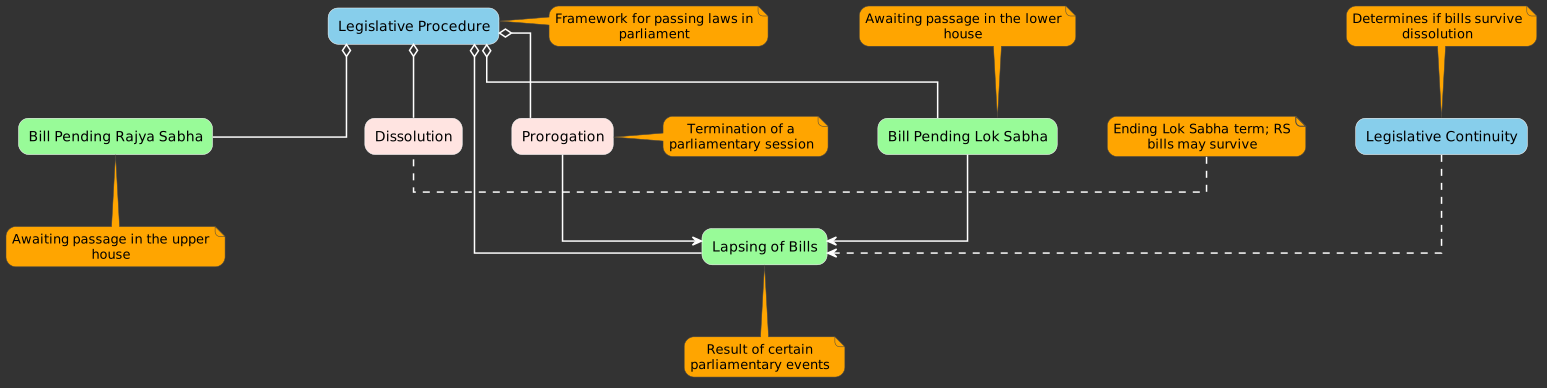
Statement 1 is incorrect. A Bill pending in the Lok Sabha does not lapse on its prorogation. Prorogation only terminates a session, but the Bill remains pending unless it has been passed by both Houses and is awaiting assent, or if it is withdrawn. A Bill in the Lok Sabha lapses only upon the dissolution of the Lok Sabha.
Statement 2 is correct. A Bill pending in the Rajya Sabha, which has not been passed by the Lok Sabha, does not lapse on the dissolution of the Lok Sabha. Only bills pending in the Lok Sabha or bills passed by the Lok Sabha but pending in the Rajya Sabha lapse upon the dissolution of the Lok Sabha. A bill originating in and pending in the Rajya Sabha, and not transmitted to the Lok Sabha, is not affected by the dissolution of the Lok Sabha.
CStrategy
For questions related to parliamentary procedures and the lapsing of bills, it is crucial to understand the distinct meanings of terms like 'prorogation,' 'adjournment,' and 'dissolution.' Memorize the specific rules for how a bill is affected at different stages and in different houses under these circumstances. Create a flowchart or table to differentiate the scenarios clearly.
DSyllabus Analysis
This question falls under Indian Polity and Governance, specifically concerning the functioning of the Parliament of India and legislative procedures.
EQuestion Analysis
Medium. This question requires a precise understanding of the rules regarding the lapsing of bills in the Indian Parliament, which can be confusing due to similar-sounding terms.