
Question 9
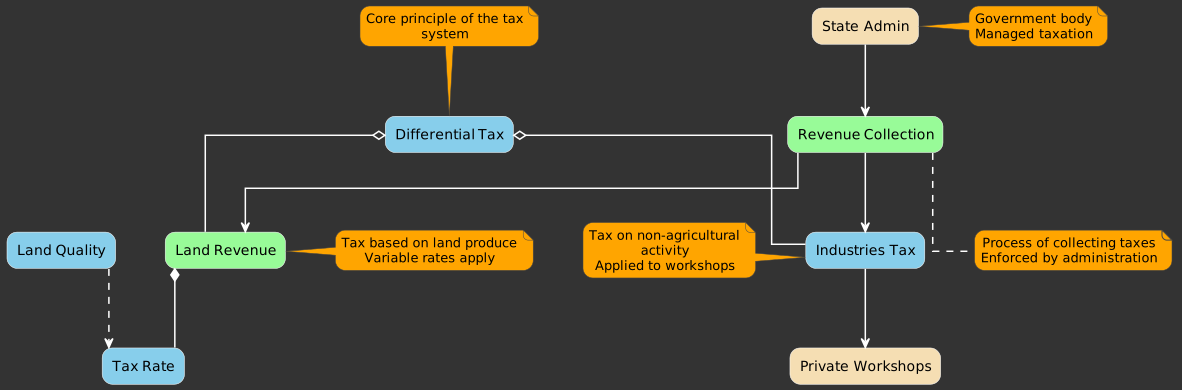
1. The tax rate on land was fixed depending on the quality of the land.
2. Private owners of workshops paid an industries tax.
Which of the statements given above is/are correct?
AOptions
BSolution
Krishna Deva Raya, the most famous ruler of the Vijayanagar Empire, had a well-organized administration and revenue system. His work, 'Amuktamalyada', provides insights into the administrative practices of his time.
- The tax rate on land was fixed depending on the quality of the land: The Vijayanagar Empire had a systematic land revenue administration. Land was classified based on its fertility and the type of crop grown, and the tax rates varied accordingly. This practice was common in many Indian kingdoms and ensured a fairer assessment based on productive capacity. This statement is correct.
- Private owners of workshops paid an industries tax: Apart from land revenue, the state derived income from various other sources, including taxes on professions, trades, and workshops. Artisans, craftsmen, and private workshop owners were indeed subject to an industries tax. This indicates a diversified revenue base for the empire. This statement is correct.
Therefore, both statements are correct regarding the taxation system of Krishna Deva Raya.
CStrategy
For questions on ancient and medieval Indian history, especially related to administration and economy, pay attention to the details of revenue systems, land administration, and other sources of state income. Referring to primary historical accounts (if mentioned) can sometimes provide clues.
DSyllabus Analysis
This question falls under the History of India, specifically medieval Indian history and the Vijayanagar Empire.
EQuestion Analysis
Medium. It requires specific knowledge about the administrative and economic aspects of the Vijayanagar Empire under Krishna Deva Raya, which might not be covered in all general history texts in detail.