
71
Question 71
Which of the following practices can help in water conservation in agriculture?
1. Reduced or zero tillage of the land
2. Applying gypsum before irrigating the field
3. Allowing crop residue to remain in the field
Select the correct answer using the code given below:
1. Reduced or zero tillage of the land
2. Applying gypsum before irrigating the field
3. Allowing crop residue to remain in the field
Select the correct answer using the code given below:
AOptions
A
A) 1 and 2 only
B
B) 3 only
C
C) 1 and 3 only
D
D) 1, 2 and 3
BSolution
Let's evaluate each practice for water conservation in agriculture:
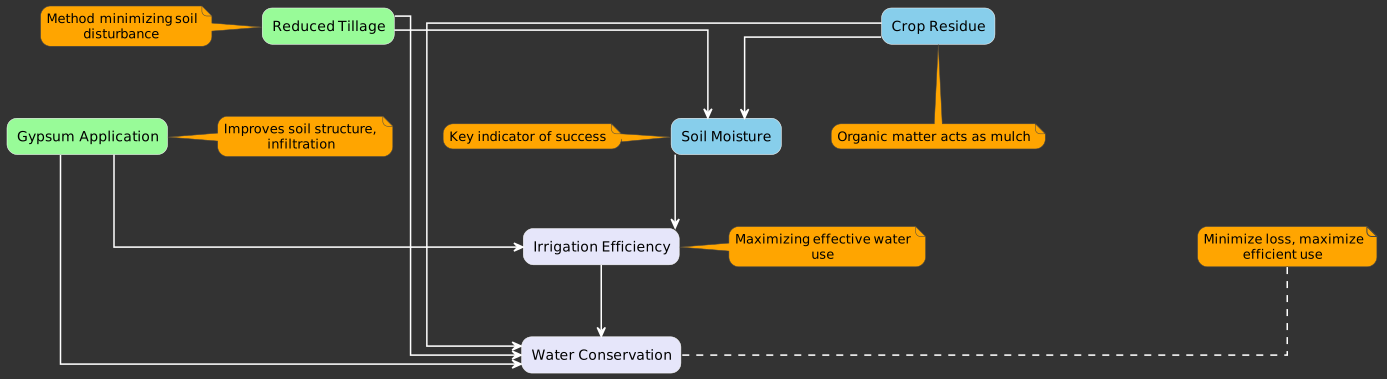
- 1. Reduced or zero tillage of the land: This practice significantly helps in water conservation. By minimizing soil disturbance, it preserves soil structure, increases organic matter, and enhances water infiltration and retention, while reducing evaporation and runoff from the soil surface.
- 2. Applying gypsum before irrigating the field: Applying gypsum (calcium sulfate) is primarily used to improve soil structure, especially in sodic (high sodium) and saline soils, by replacing sodium ions with calcium. While improved soil structure in such specific problematic soils can lead to better water infiltration, it's not a general water conservation practice applicable or beneficial for all types of fields or a primary method compared to other practices.
- 3. Allowing crop residue to remain in the field: This practice, often called mulching or residue retention, is an excellent water conservation method. The residue acts as a protective cover over the soil surface, reducing direct evaporation, moderating soil temperature, suppressing weed growth (which compete for water), and improving soil organic matter, all of which contribute to better water retention and reduced irrigation needs.
Therefore, practices 1 and 3 are effective for water conservation in agriculture.
CStrategy
For agriculture and environment questions, understand the principles behind sustainable farming practices. Relate practices to their direct impact on resource conservation, such as water and soil. Distinguish between general conservation methods and specific soil amendments or treatments.
DSyllabus Analysis
This question is from Agriculture and Environment, specifically sustainable agriculture practices and water management.
EQuestion Analysis
Medium. Requires understanding of agricultural practices and their environmental impacts, particularly concerning water.