
Question 17
With reference to the Constitution of India, the Directive Principles of State Policy constitute limitations upon
1. legislative function.
2. executive function.
Which of the above statements is/are correct?
AOptions
BSolution
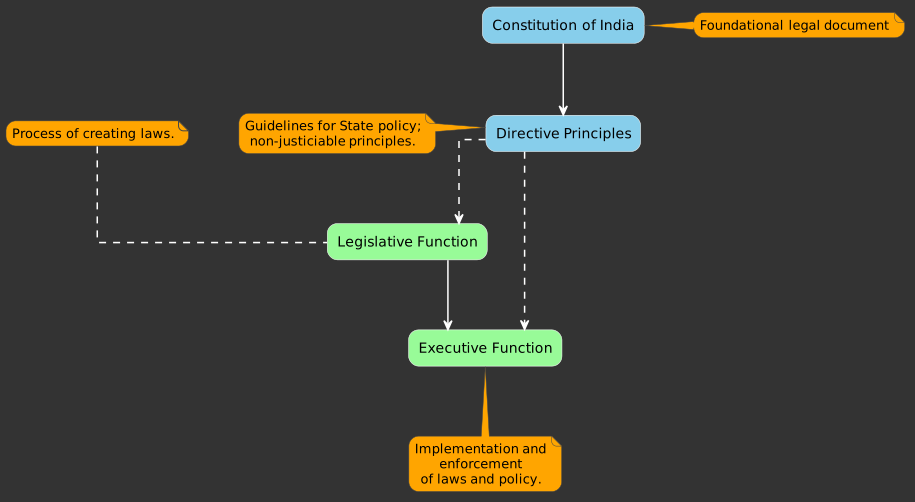
The Directive Principles of State Policy (DPSPs) are enshrined in Part IV of the Indian Constitution. As per Article 37, they are fundamental in the governance of the country and it shall be the duty of the State to apply these principles in making laws. However, they are explicitly non-justiciable, meaning they cannot be enforced by any court. More importantly, DPSPs are not 'limitations' upon legislative or executive functions. Instead, they serve as *positive guidelines* or *moral obligations* for the State to follow in formulating policies and laws, aiming to establish a welfare state. Limitations on legislative and executive powers are primarily imposed by Fundamental Rights or the basic structure of the Constitution, not by the DPSPs, which are inspirational rather than restrictive.
CStrategy
For questions on the nature and enforceability of different parts of the Constitution (e.g., Fundamental Rights, DPSPs), understand their core characteristics and the distinctions between them. Remember that DPSPs are guiding principles, not legally enforceable limitations.
DSyllabus Analysis
Indian Polity - Directive Principles of State Policy, Fundamental Rights, Constitutional Principles.
EQuestion Analysis
Medium. Requires a clear understanding of the nature and enforceability of DPSPs and their distinction from other constitutional provisions.