
Question 45
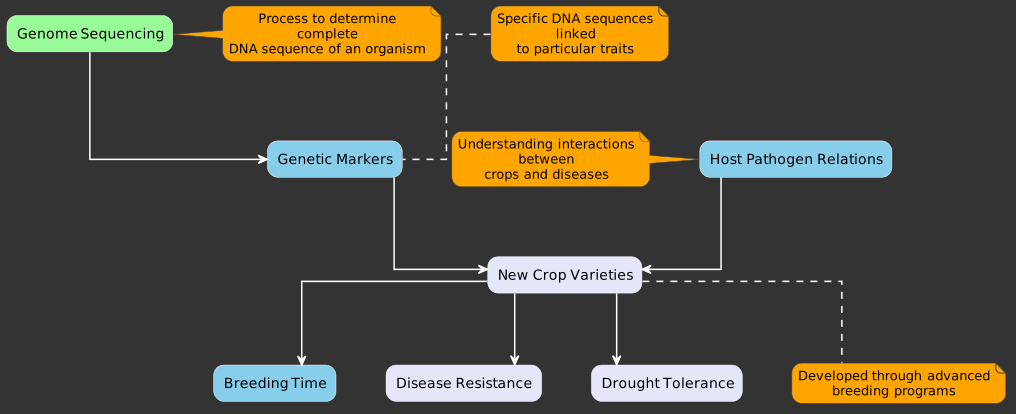
1. Genome sequencing can be used to identify genetic markers for disease resistance and drought tolerance in various crop plants.
2. This technique helps in reducing the time required to develop new varieties of crop plants.
3. It can be used to decipher the host-pathogen relationships in crops.
Select the correct answer using the code given below:
AOptions
BSolution
Genome sequencing, the process of determining the complete DNA sequence of an organism's genome, has immense applications in agriculture:
1. Identify genetic markers for disease resistance and drought tolerance: By sequencing the genome, scientists can pinpoint specific genes or genetic markers associated with desirable traits like resistance to diseases or tolerance to abiotic stresses like drought. This allows for targeted breeding.
2. Reduce the time required to develop new varieties: Traditional breeding is time-consuming. Genome sequencing, combined with marker-assisted selection, allows breeders to rapidly identify and select plants with desired traits, significantly accelerating the development of new, improved crop varieties.
3. Decipher host-pathogen relationships: Understanding the genetic makeup of both the crop (host) and the pathogen (e.g., fungi, bacteria, viruses) allows researchers to identify genes involved in resistance or susceptibility. This knowledge is crucial for developing effective disease management strategies and breeding disease-resistant crops.
Therefore, all three statements correctly describe advantages of implementing genome sequencing in agriculture.
CStrategy
For questions on advanced scientific techniques, understand their core principle and broad applications. Think about how the technique solves existing problems or enhances current processes in the specified field.
DSyllabus Analysis
This question falls under Science & Technology, specifically Biotechnology and its applications in agriculture.
EQuestion Analysis
Medium. Requires understanding the practical applications of a scientific technique in a specific domain.