
Question 92
AOptions
BSolution
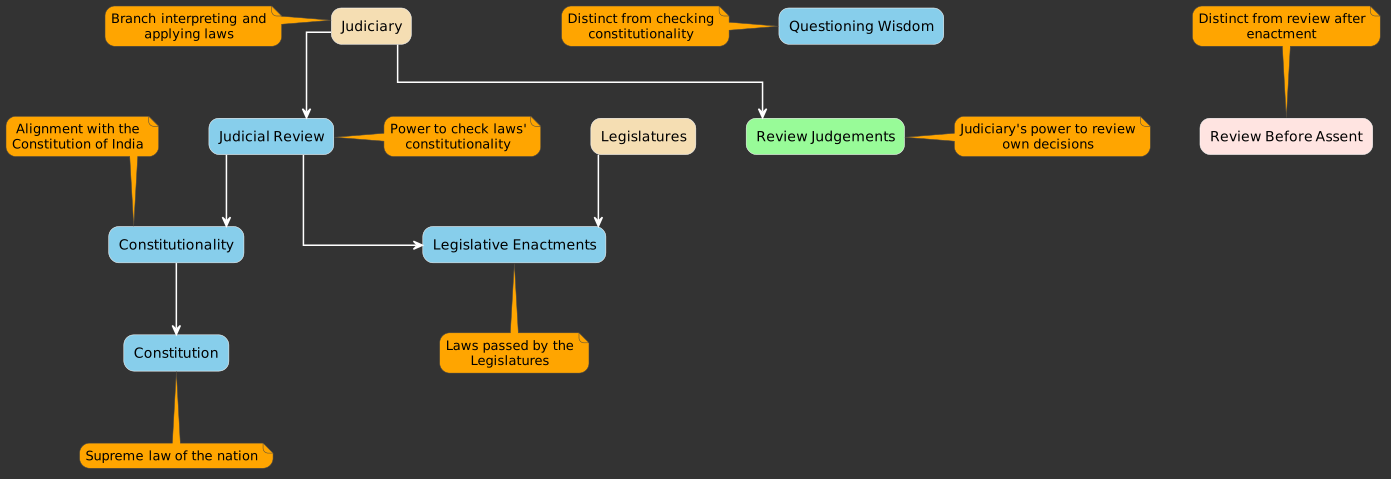
Judicial Review is a fundamental feature of the Indian Constitution, deeply rooted in its structure and principles. It refers to the power of the Supreme Court and the High Courts to examine the constitutionality of legislative enactments and executive orders of both the Central and State governments.
If, upon examination, they find that any law or executive order violates the provisions of the Constitution (e.g., infringes on Fundamental Rights, exceeds the legislative competence of the body that enacted it, or goes against the basic structure of the Constitution), they can declare such a law or order as unconstitutional and, therefore, null and void.
The other options describe different aspects or misinterpretations of judicial power:
B) Questioning the wisdom of laws: Judicial review is about constitutionality, not the wisdom or policy desirability of a law, though sometimes the two can overlap.
C) Reviewing enactments before Presidential assent: Laws are reviewed *after* enactment, not before presidential assent.
D) Reviewing its own judgments: This is the power of 'review petition' or 'curative petition', a specific aspect of the judiciary's power, but not the primary meaning of 'Judicial Review' in the context of laws and executive orders.
CStrategy
For fundamental concepts in Polity like Judicial Review, ensure a precise understanding of their definition and scope. Distinguish between similar-sounding terms or related judicial powers. Focus on the core function and the constitutional basis of the concept.
DSyllabus Analysis
This question falls under Indian Polity and Governance, specifically the features of the Indian Constitution and the powers of the Judiciary, aligning with the UPSC Prelims syllabus.
EQuestion Analysis
Easy. Judicial Review is a foundational concept in Indian Polity and a frequently tested topic, making its definition well-known to aspirants.