
Question 72
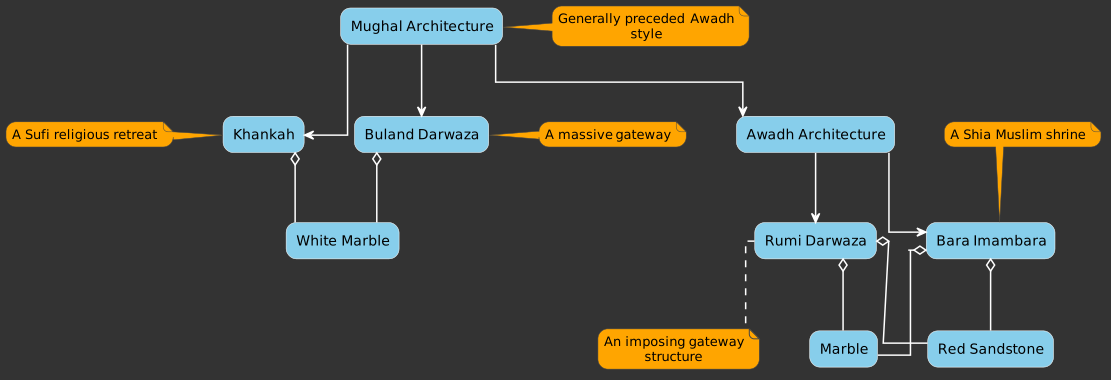
1. White marble was used in making Buland Darwaza and Khankah at Fatehpur Sikri.
2. Red sandstone and marble were used in making Bara Imambara and Rumi Darwaza at Lucknow.
Which of the statements given above is/are correct?
AOptions
BSolution
Let's analyze the statements regarding architectural materials:
1. White marble was used in making Buland Darwaza and Khankah at Fatehpur Sikri. This statement is incorrect. The prominent structures at Fatehpur Sikri, including the Buland Darwaza and the main complex, are primarily constructed from red sandstone. While some white marble is used for inlay work and specific structures like the tomb of Sheikh Salim Chishti within the complex, the primary material for Buland Darwaza is red sandstone.
2. Red sandstone and marble were used in making Bara Imambara and Rumi Darwaza at Lucknow. This statement is correct. While the primary construction material for the Bara Imambara and Rumi Darwaza in Lucknow (built during the Awadh period in the late 18th century) was brick and lime mortar (using a special 'lakhauri' brick), red sandstone and marble were indeed used for decorative elements, carvings, and ornamentation in these structures. Their aesthetic appeal comes from a combination of these materials and intricate stucco work.
Therefore, only statement 2 is correct.
CStrategy
For questions on architectural history, pay attention to the primary building materials and construction techniques characteristic of different periods and regions. Distinguish between primary structural materials and materials used for decorative purposes.
DSyllabus Analysis
This question falls under Indian Art & Culture, specifically focusing on Mughal and Awadhi architecture and their use of building materials.
EQuestion Analysis
Difficult. Requires detailed knowledge of the specific materials used in various historical monuments.