
Question 69
AOptions
BSolution
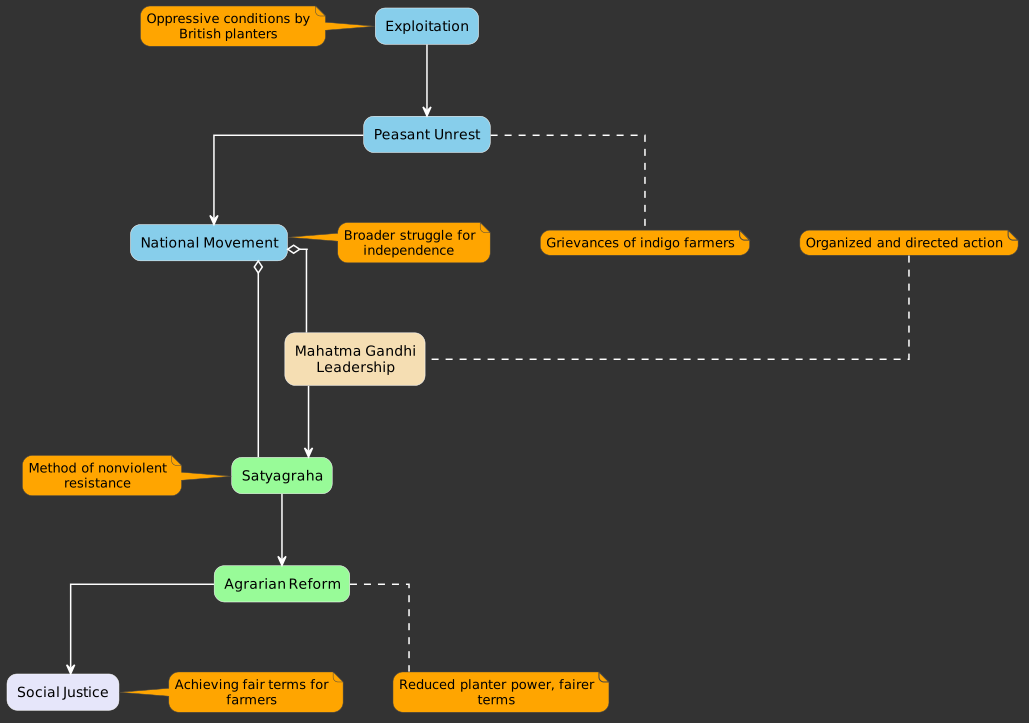
The Champaran Satyagraha (1917) was Mahatma Gandhi's first major successful experiment with Satyagraha in India. Its most significant aspect was its role in integrating local peasant grievances with the broader Indian national movement.
Under the 'tinkathia' system in Champaran, peasants were forced to cultivate indigo on 3/20th of their land and sell it at fixed prices. Gandhi's intervention, investigation, and non-violent resistance gave voice to these exploited peasants, demonstrating the power of mass mobilization and connecting local economic distress to the larger struggle against colonial exploitation. This movement marked a crucial step in involving the rural masses, especially peasants, directly into the mainstream of the national freedom struggle, thereby broadening its base and making it a mass movement.
While the satyagraha involved lawyers and had national implications, its unique contribution was drawing the attention of the national leadership to the plight of peasants and initiating their participation in the anti-colonial movement, rather than general all-India participation of lawyers, students, and women or active involvement of Dalit and Tribal communities (which came later in different contexts).
CStrategy
For questions on significant historical movements, identify their unique contributions or the lasting impact they had on the broader political or social landscape. Look for how these events broadened the scope or participation of the national movement.
DSyllabus Analysis
This question pertains to Indian History – Modern India, specifically the Gandhian Era and Peasant Movements as part of the National Movement.
EQuestion Analysis
Easy. The Champaran Satyagraha is a well-known event with a clear and distinct historical significance in the context of the Indian freedom struggle.