
Question 26
AOptions
BSolution
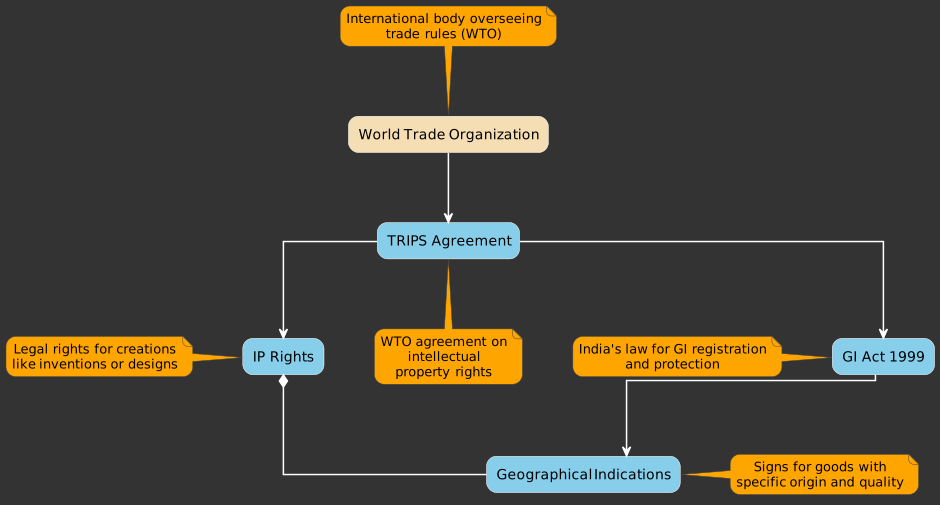
India's Geographical Indications of Goods (Registration and Protection) Act, 1999, was enacted to align with its international obligations. Specifically, this legislation was a direct response to the requirements set forth by the Agreement on Trade-Related Aspects of Intellectual Property Rights (TRIPS Agreement). The TRIPS Agreement is one of the core agreements administered by the World Trade Organization (WTO). It mandates that WTO member countries provide protection for various forms of intellectual property, including Geographical Indications (GIs). Therefore, to be compliant with its commitments under the WTO, India passed this Act to allow for the registration and legal protection of goods that possess unique qualities or a reputation due to their geographical origin.
CStrategy
For questions related to India's domestic laws and their international linkages, it is crucial to identify the major global organizations or treaties that necessitate such national legislation. Understanding the primary mandates of international bodies like WTO, ILO, IMF, or UNCTAD, and knowing which agreements fall under their purview, helps in linking national laws to their international drivers.
DSyllabus Analysis
This question pertains to Indian Economy (International Trade and Intellectual Property Rights) and International Relations (International Institutions).
EQuestion Analysis
Medium. Requires knowledge of specific Indian legislation and its international context, particularly the role of WTO in intellectual property.