
Question 47
AOptions
BSolution
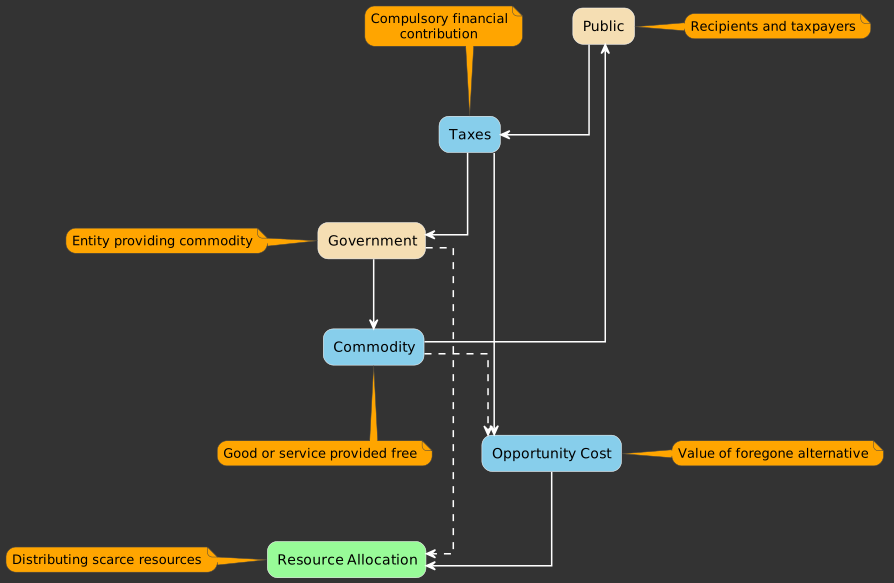
Opportunity cost is the value of the next best alternative that must be foregone when a choice is made. Even when a commodity is provided free to the public by the Government, resources (labor, capital, raw materials) are still used in its production and distribution. These resources could have been used to produce other goods or services, representing an opportunity cost. This cost does not disappear or become zero. Instead, the burden of this opportunity cost, which would typically be borne by the direct consumers of the product through its price, is transferred to the general tax-paying public, who collectively fund the government's expenditure. The government acts as an intermediary, shifting the financial burden from direct users to taxpayers.
CStrategy
For questions on fundamental economic principles like opportunity cost, remember that resources are scarce and every decision, even a 'free' one from the perspective of the recipient, involves a cost to society. Identify who ultimately bears this cost when goods are provided publicly.
DSyllabus Analysis
This question falls under Indian Economy, specifically fundamental economic concepts (opportunity cost) and public finance.
EQuestion Analysis
Medium. Requires a clear understanding of opportunity cost in the context of public goods provision.