
Question 2
1. Hard and waxy leaves
2. Tiny leaves
3. Thorns instead of leaves
Select the correct answer using the code given below:
AOptions
BSolution
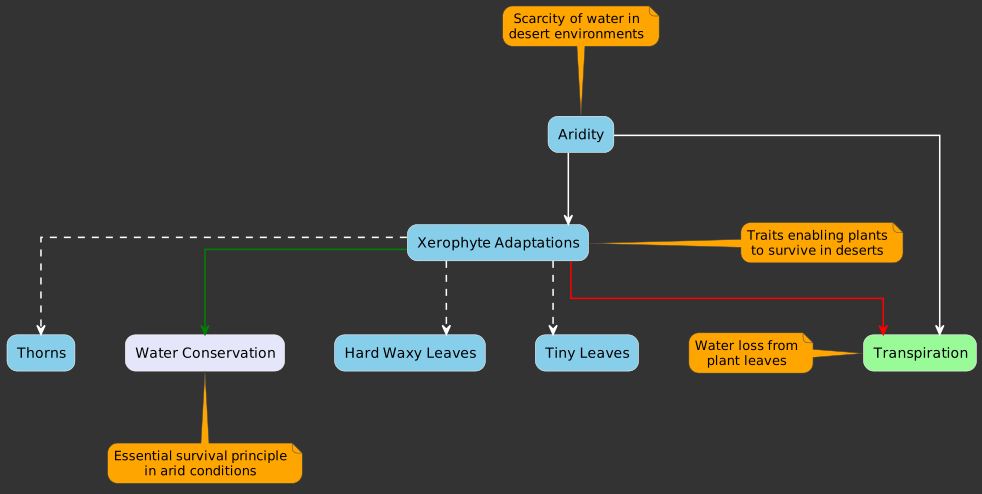
All three statements describe common leaf modifications found in desert plants (xerophytes) to adapt to arid conditions and minimize water loss through transpiration.
1. Hard and waxy leaves: A thick, waxy cuticle on the leaf surface (often leading to a hard texture) significantly reduces the rate of water evaporation. This is a common adaptation in plants like cacti and succulents.
2. Tiny leaves: Reducing the surface area of leaves directly reduces the number of stomata and the total area available for transpiration. Many desert plants have very small leaves or shed them during extreme drought to conserve water.
3. Thorns instead of leaves: In many desert plants, such as cacti, leaves are modified into spines or thorns. This drastically reduces the surface area for water loss and also serves as a defense mechanism against herbivores. Photosynthesis in such plants is typically carried out by the green stems.
Therefore, all three modifications contribute to inhibiting water loss in desert environments.
CStrategy
For questions on plant adaptations, apply basic biological principles. Think about the challenges posed by the environment (e.g., water scarcity in deserts, low light in forests) and how plants would naturally evolve mechanisms to cope with these challenges. Consider how each physical feature would impact processes like photosynthesis, respiration, and transpiration.
DSyllabus Analysis
This question is from General Science (Biology) and Environment, focusing on plant adaptations and ecology, particularly in specific biomes.
EQuestion Analysis
Easy. It relies on fundamental biological knowledge about plant adaptations to environmental conditions.