
Question 99
1. Birds
2. Dust blowing
3. Rain
4. Wind blowing
Which of the above spread plant diseases ?
AOptions
BSolution
Let's analyze how each of the given factors can spread plant diseases:
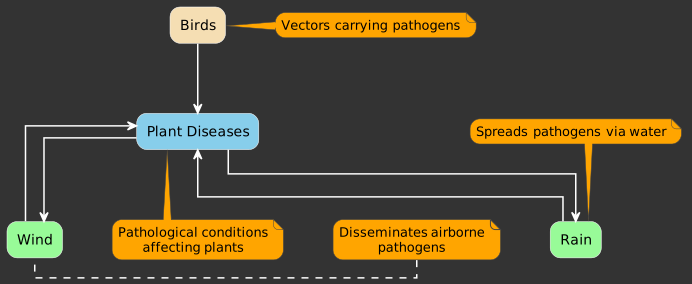
1. Birds: Yes, birds can act as vectors for plant diseases. They can carry pathogens (e.g., fungal spores, bacteria, viruses) or their insect vectors from infected plants to healthy ones, either on their bodies, beaks, or in their droppings.
2. Dust blowing: Yes, wind-blown dust can carry microscopic disease-causing agents, such as fungal spores, bacteria, or even small insect eggs, over considerable distances. When this dust settles on healthy plants, it can initiate new infections.
3. Rain: Rain primarily facilitates the local dispersal of plant pathogens (e.g., fungal spores, bacterial cells) already present on the plant or in the soil through rain splash. However, it's generally considered a short-distance dispersal agent rather than a primary 'carrier' that spreads diseases over long distances in the same way wind or animals might. While rain is critical for infection processes and local spread, in the context of broader 'spreading' agents, it is often distinguished from direct carriers like wind or organisms. The question implicitly looks for direct modes of transport from one place to another or to new plants, which 1, 2, and 4 do directly.
4. Wind blowing: Yes, wind is a major agent for spreading airborne plant pathogens. It can carry fungal spores, pollen carrying viruses, and even small insect vectors over vast distances, leading to rapid and widespread dissemination of diseases.
Therefore, birds, dust blowing, and wind blowing are direct means by which plant diseases are spread. While rain helps in local dispersal, it is often not categorized as a primary long-distance 'spreading' agent in the same sense as the others.
CStrategy
For questions on biological processes and environmental factors, differentiate between direct causal agents (that physically transport or carry pathogens/vectors) and environmental conditions that merely facilitate or enhance the spread. Pay attention to the precise phrasing of the question (e.g., 'spread' vs. 'facilitate').
DSyllabus Analysis
This question falls under Environment and Ecology, with aspects of Biology, specifically focusing on plant diseases and their modes of transmission.
EQuestion Analysis
Medium. This question is tricky due to the subtle distinction regarding 'Rain' as a spreading agent. While rain splash facilitates local spread, it's not a 'carrier' in the same way as wind or animals for broader dissemination.