
Question 52
AOptions
BSolution
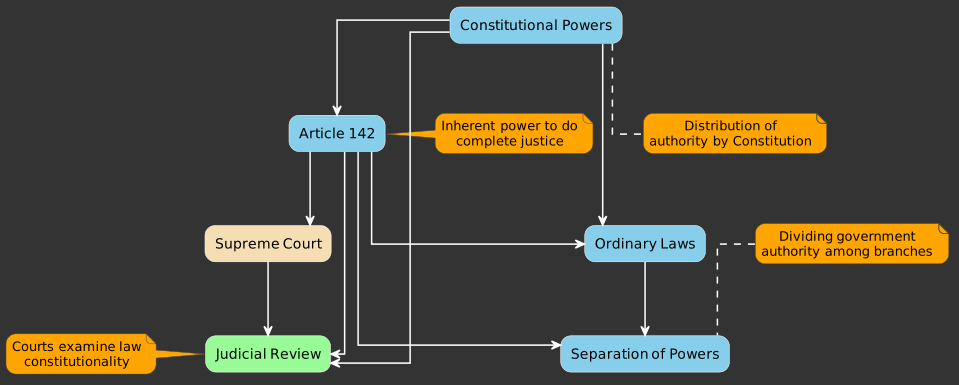
Article 142 of the Constitution of India grants the Supreme Court extraordinary power to pass any decree or order necessary for doing 'complete justice' in any case or matter pending before it. This power is intended to be invoked in situations where existing laws may not adequately address the unique circumstances to ensure equitable outcomes. The phrase "prohibitions or limitations or provisions contained in ordinary laws cannot act as prohibitions or limitations on the constitutional powers under Article 142" implies that the Supreme Court's power to do complete justice is not restricted by statutory laws passed by Parliament. The Court can issue directions and orders that might even override or go beyond the specific provisions of existing legislation, in the interest of delivering ultimate justice. Option B accurately captures this essence, stating that the Supreme Court is not constrained by laws made by the Parliament when exercising its powers under Article 142.
CStrategy
For questions related to Constitutional Articles, it is vital to understand the core essence and scope of each Article. Often, UPSC asks about the practical implications or judicial interpretations of these articles. Look for options that directly reflect the spirit and purpose of the constitutional provision, especially when it grants overarching powers to a constitutional body.
DSyllabus Analysis
This question pertains to the Indian Polity section of the UPSC Prelims syllabus, specifically focusing on the powers and functions of the Supreme Court of India and constitutional provisions like Article 142.
EQuestion Analysis
Medium. Understanding the special nature and wide scope of Article 142 is key to answering this question, which requires conceptual clarity on judicial powers.