
Question 94
A digital signature is
1. an electronic record that identifies the certifying authority issuing it
2. used to serve as a proof of identity of an individual to access information or server on Internet
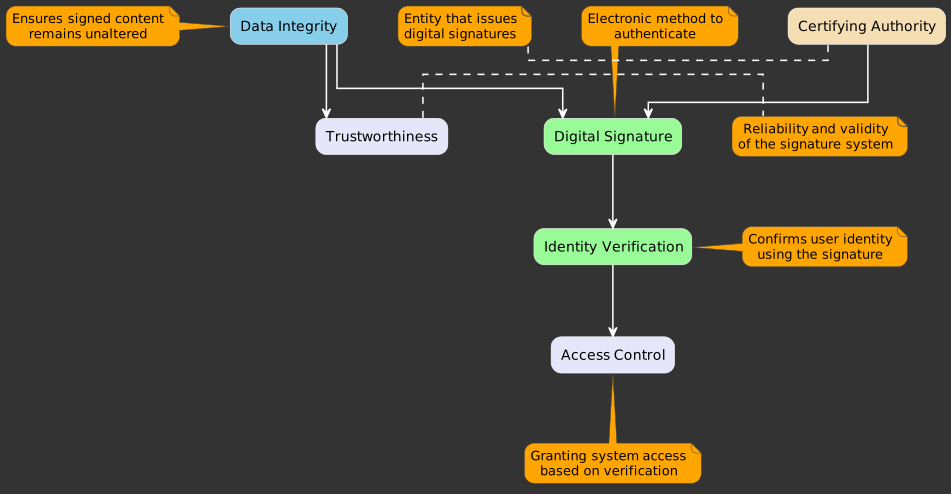
3. an electronic method of signing an electronic document and ensuring that the original content is unchanged
Which of the statements given above is/are correct?
AOptions
BSolution
Let's analyze the statements about a digital signature:
1. An electronic record that identifies the certifying authority issuing it. This statement is partially misleading or incorrect as a primary definition. While a digital signature relies on a digital certificate issued by a Certifying Authority (CA), and this certificate contains information about the CA, the digital signature itself is the cryptographic signature generated using the signatory's private key. Its main purpose is to authenticate the signatory and ensure document integrity, not primarily to identify the CA, although the CA's role is integral to its trust framework.
2. Used to serve as a proof of identity of an individual to access information or server on Internet. This statement is generally incorrect. While digital signatures confirm the identity of the signer of a document, they are not typically used as a direct method for logging in or accessing information/servers on the internet in the same way a username/password or multi-factor authentication works for general access. Their primary use is for verifying the authenticity and integrity of digital documents or transactions.
3. An electronic method of signing an electronic document and ensuring that the original content is unchanged. This statement is correct. This is the core function of a digital signature. It uses cryptography to bind a person's identity to a digital document in a way that provides assurance of authenticity (who signed it) and integrity (that the document has not been altered since it was signed). If any change is made to the document after it's signed, the digital signature becomes invalid.
Therefore, only statement 3 accurately describes a digital signature's primary function.
CStrategy
For questions on technology concepts like digital signatures, understand their fundamental purpose and how they achieve it. Distinguish between their primary functions and ancillary roles or common misconceptions. Focus on the core technical definition.
DSyllabus Analysis
This question falls under 'Science and Technology', specifically 'Information and Communication Technology (ICT)' and 'Cyber Security' within the UPSC Prelims syllabus.
EQuestion Analysis
Medium. Requires a precise understanding of what a digital signature is and how it functions.