
Question 14
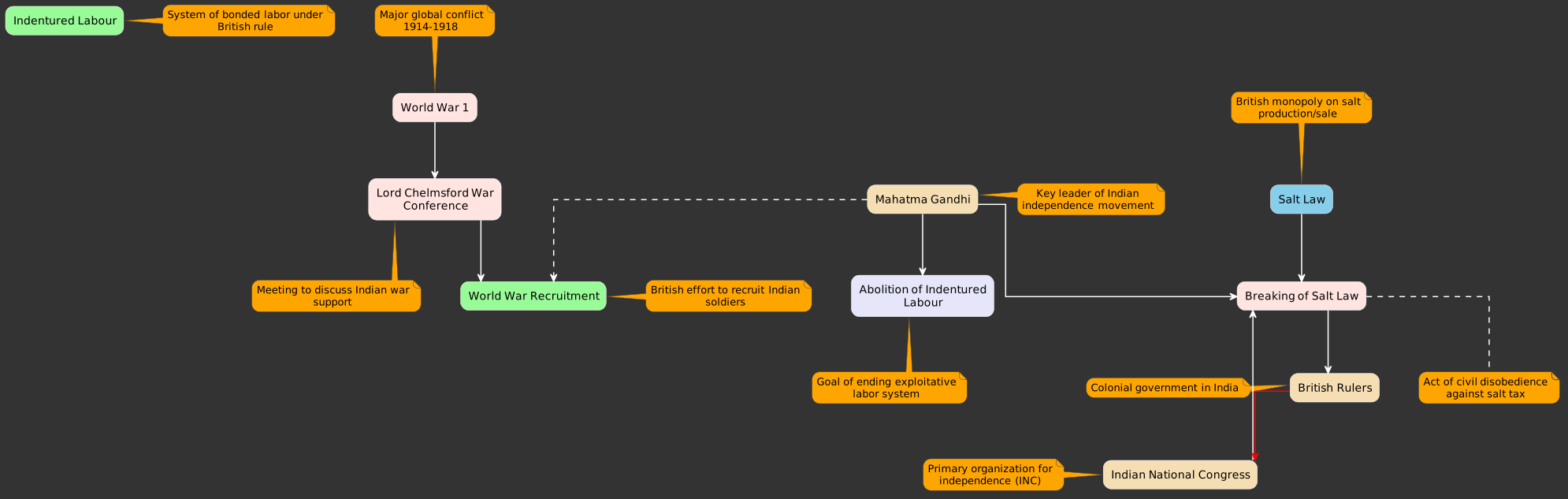
1. Mahatma Gandhi was instrumental in the abolition of the system of 'indentured labour'.
2. In 'Lord Chelmsford's War Conference', Mahatma Gandhi did not support the resolution on recruiting Indians for World War.
3. Consequent upon the breaking of Salt Law by Indian people, the Indian National Congress was declared illegal by the colonial rulers.
Which of the statements given above are correct?
AOptions
BSolution
Statement 1 is correct. Mahatma Gandhi played a crucial role in campaigning against the system of 'indentured labour' or 'girmitiya' system, especially after his experiences in South Africa, where Indian indentured labourers faced severe exploitation. His efforts, along with those of other Indian nationalists, contributed significantly to the eventual abolition of this system by the British Indian government in 1917.
Statement 2 is incorrect. In 'Lord Chelmsford's War Conference' in 1918, Mahatma Gandhi, contrary to what the statement suggests, actually supported the resolution on recruiting Indians for World War I. He believed that by cooperating with the British war effort, Indians could secure greater political concessions or even Swaraj. He even earned the epithet 'recruiting sergeant' for his efforts.
Statement 3 is correct. Following the breaking of the Salt Law during the Civil Disobedience Movement (1930-34), which saw widespread participation and defiance against British rule, the Indian National Congress was indeed declared an illegal organization by the colonial government. Many leaders were arrested, and government tried to suppress the movement severely.
CStrategy
For questions on modern Indian history and freedom struggle, focus on the roles of key leaders like Mahatma Gandhi in specific events. Understand the chronological order of movements and the British responses. Be careful with statements describing a leader's stance on controversial issues; verify if they supported or opposed something based on historical facts.
DSyllabus Analysis
This question pertains to Indian History, specifically Modern Indian History, covering the freedom struggle, Mahatma Gandhi's role, and British colonial policies.
EQuestion Analysis
Medium. Statement 2 is a common point of confusion for students, requiring accurate knowledge of Gandhi's early stance during WWI.