
Question 10
AOptions
BSolution
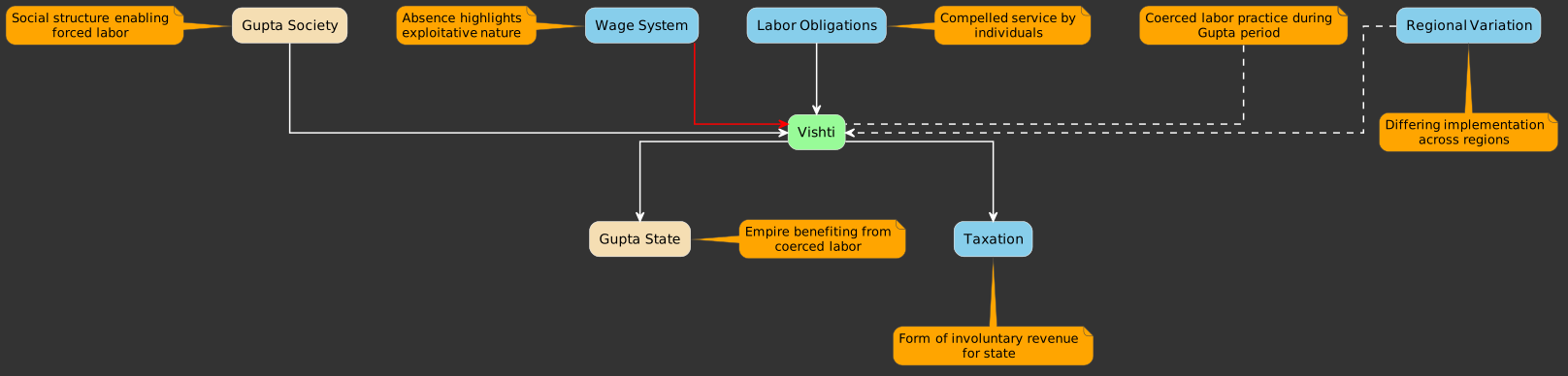
During the Gupta period, 'Vishti' referred to forced labour, a common practice where individuals, particularly the Shudras and various artisans, were compelled to work for the state without remuneration. This unpaid labour was indeed considered a significant source of income for the State, functioning as a form of tax or tribute extracted from the populace. It helped in the construction of public works, military activities, and other state needs, without requiring the state to expend its monetary resources.
Option B is incorrect because forced labour (Vishti) was prevalent across various parts of the Gupta Empire, including regions like Madhya Pradesh and Kathiawar. Option C is incorrect as the very definition of 'Vishti' implies unpaid labour; forced labourers were generally not entitled to weekly wages. Option D is incorrect; there is no historical evidence to suggest that only the eldest son was specifically designated for forced labour.
CStrategy
For questions on ancient Indian administration and economy, understand the meaning of specific terms (like 'Vishti', 'Udranga', 'Bhaga'). Focus on the fundamental nature of these practices – whether they were taxes, forms of labour, or administrative posts. Eliminate options that present extreme or unsubstantiated claims.
DSyllabus Analysis
This question falls under Indian History, specifically Ancient Indian History, focusing on the socio-economic and administrative aspects of the Gupta period.
EQuestion Analysis
Medium. Requires specific knowledge of administrative and economic terms from the Gupta period.