
Question 13
1. Saint Nimbarka was a contemporary of Akbar.
2. Saint Kabir was greatly influenced by Shaikh Ahmad Sirhindi.
Which of the statements given above is/are correct?
AOptions
BSolution
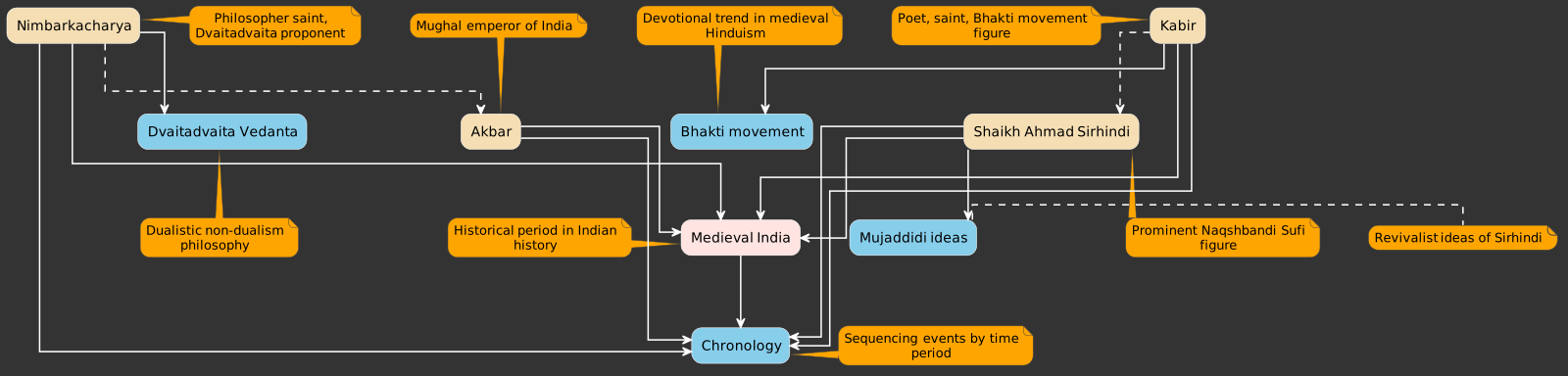
Statement 1 is incorrect. Saint Nimbarka was a prominent philosopher and Vaishnavite saint who lived in the 13th century CE. He was the founder of the Dvaitadvaita (dualistic monism) school of thought. Emperor Akbar ruled in the 16th century (1556-1605 CE), approximately three centuries after Nimbarka. Thus, Nimbarka was not a contemporary of Akbar.
Statement 2 is incorrect. Saint Kabir was a 15th-century mystic poet and saint, known for his syncretic philosophy that blended elements of Hinduism and Islam. He was a contemporary of Sikandar Lodi. Shaikh Ahmad Sirhindi was a prominent Naqshbandi Sufi saint and scholar who lived from 1564 to 1624 CE, primarily active during the late 16th and early 17th centuries, which means he lived much later than Kabir. Furthermore, Sirhindi was known for his orthodox revivalist views and for advocating for strict adherence to Islamic law, often opposing the syncretic trends encouraged by Akbar and prevalent in Sufism, which makes it highly improbable that Kabir was influenced by him. Their timelines and philosophies do not align for such influence.
CStrategy
For questions involving historical figures and their timelines or influences, it is crucial to establish chronological order. Knowing the centuries or approximate ruling periods of emperors and the active periods of saints/philosophers is vital. Be cautious of statements implying influence between individuals who lived in different eras or had opposing philosophies.
DSyllabus Analysis
This question falls under Indian History, specifically Medieval Indian History, focusing on prominent saints and their historical contexts.
EQuestion Analysis
Medium to Difficult. Requires precise knowledge of the timelines of specific saints and historical figures to correctly assess their contemporaries and mutual influences.