
Question 79
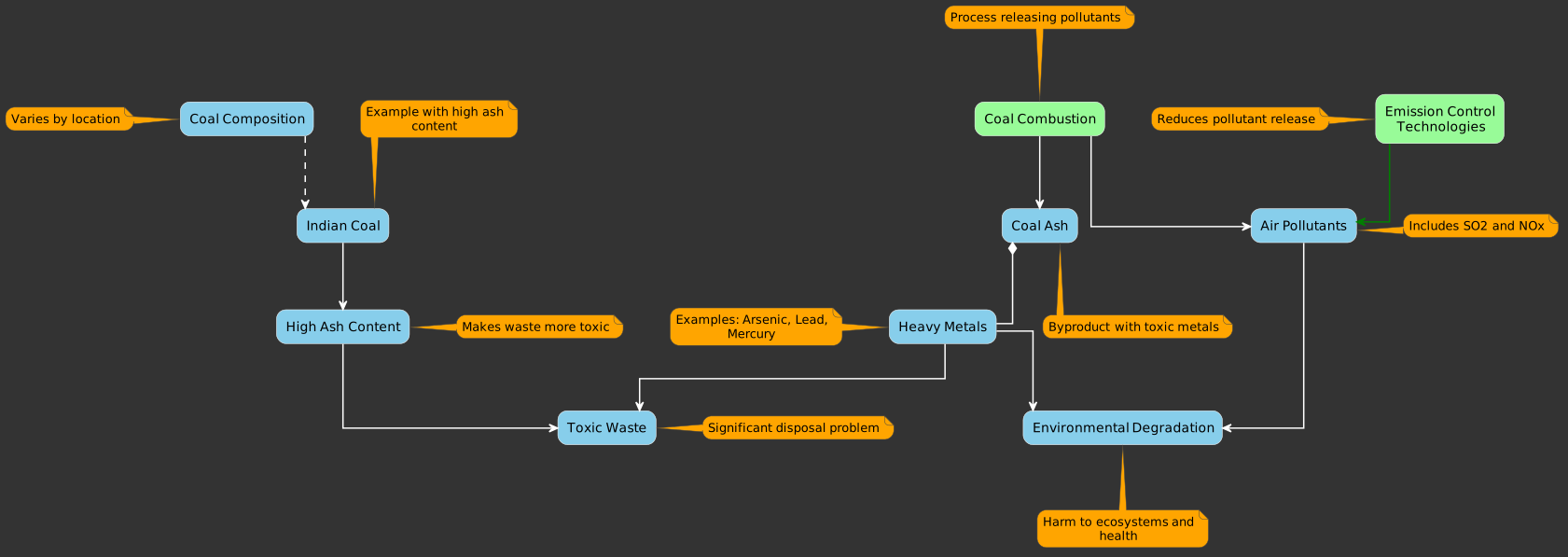
1. Coal ash contains arsenic, lead and mercury.
2. Coal-fired power plants release sulphur dioxide and oxides of nitrogen into the environment.
3. High ash content is observed in Indian coal.
Which of the statements given above is/are correct?
AOptions
BSolution
All three statements regarding coal and its combustion are correct:
1. Coal ash contains arsenic, lead and mercury: When coal is burned in thermal power plants, it produces solid by-products, primarily fly ash and bottom ash. These ashes are known to contain various toxic heavy metals, including arsenic, lead, mercury, chromium, and cadmium, which are naturally present in coal. Proper disposal and management of coal ash are crucial to prevent environmental contamination.
2. Coal-fired power plants release sulphur dioxide and oxides of nitrogen into the environment: Coal combustion is a significant source of air pollutants. Sulphur dioxide (SO2) is released from the sulfur content in coal, and oxides of nitrogen (NOx) are formed at the high temperatures found in the combustion chambers. Both SO2 and NOx are major contributors to acid rain, smog, and respiratory problems.
3. High ash content is observed in Indian coal: Indian coal is characterized by its generally high ash content, often ranging from 30% to 50% or even higher. This is a distinguishing feature compared to coal found in many other parts of the world, which typically has lower ash content. The high ash content in Indian coal poses challenges for power generation efficiency and generates large volumes of ash waste that need to be managed.
Therefore, all the statements accurately describe characteristics and environmental impacts associated with coal.
CStrategy
For questions about energy sources and their environmental impacts, it's essential to recall the major pollutants, by-products, and characteristic properties associated with them. General knowledge about the quality and specific issues related to India's natural resources (like coal) is often tested.
DSyllabus Analysis
This question falls under Environment & Ecology, specifically pollution and degradation, energy resources, and the environmental impacts of industries, particularly thermal power generation.
EQuestion Analysis
Easy to Medium. The facts presented are commonly known aspects of coal combustion and its environmental consequences, especially in the Indian context.