
Question 84
1. Cassava
2. Damaged wheat grains
3. Groundnut seeds
4. Horse gram
5. Rotten potatoes
6. Sugar beet
Select the correct answer using the code given below:
AOptions
BSolution
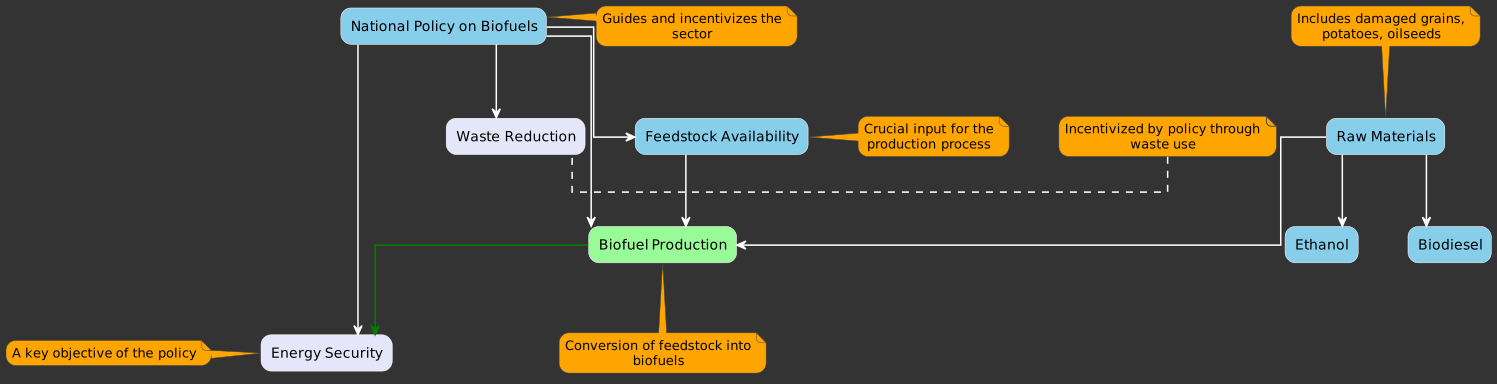
India's National Policy on Biofuels (2018) aims to promote the production of biofuels from various feedstocks, with a key objective of reducing dependence on crude oil imports and managing agricultural surplus. The policy categorizes biofuels into First Generation (1G), Second Generation (2G), Third Generation (3G), and Fourth Generation (4G) biofuels, prioritizing non-food feedstocks and damaged food grains to avoid competition with food security.
- 1. Cassava: Yes, cassava is a starch-rich crop and is a recognized feedstock for ethanol production (a 1G biofuel).
- 2. Damaged wheat grains: Yes, the policy explicitly allows the use of surplus and damaged food grains (like wheat, rice) for ethanol production, addressing the issue of food grain wastage and providing an alternative revenue stream for farmers.
- 3. Groundnut seeds: No. Groundnut is primarily an oilseed and food crop. While oilseeds can be used for biodiesel, the policy typically prioritizes non-edible oilseeds or used cooking oil to avoid diverting edible oils from food uses, unless they are damaged or surplus. Given other options, it's not a primary focus for ethanol.
- 4. Horse gram: No. Horse gram is a pulse, primarily a food crop. Similar to groundnut, its direct use for biofuel (ethanol) is not a primary focus of the policy, which aims to avoid diverting food crops for fuel.
- 5. Rotten potatoes: Yes, similar to damaged wheat grains, surplus or rotten potatoes (which are starch-rich) can be effectively used for ethanol production. This aligns with the policy's objective of utilizing waste and damaged food materials.
- 6. Sugar beet: Yes, sugar beet is a sugar-rich crop and is a recognized feedstock for ethanol production (a 1G biofuel).
Therefore, cassava, damaged wheat grains, rotten potatoes, and sugar beet are the raw materials that can be used for biofuel production under India's National Policy on Biofuels, emphasizing the use of surplus/damaged food sources and energy crops.
CStrategy
For policy-related questions, especially those involving resource utilization or subsidies, understand the underlying principles and objectives of the policy. The National Policy on Biofuels aims to balance energy security with food security, emphasizing the use of non-food feedstocks, agricultural waste, and damaged food grains. Be cautious about options that might divert prime food crops for fuel production.
DSyllabus Analysis
This question relates to Economy, Agriculture, and Environment & Ecology, specifically government policies on renewable energy, resource management, and sustainable development.
EQuestion Analysis
Difficult. This question requires detailed knowledge of the specific provisions and permitted feedstocks under India's National Policy on Biofuels, which often involves nuanced understanding of which crops are prioritized or excluded.