
Question 75
AOptions
BSolution
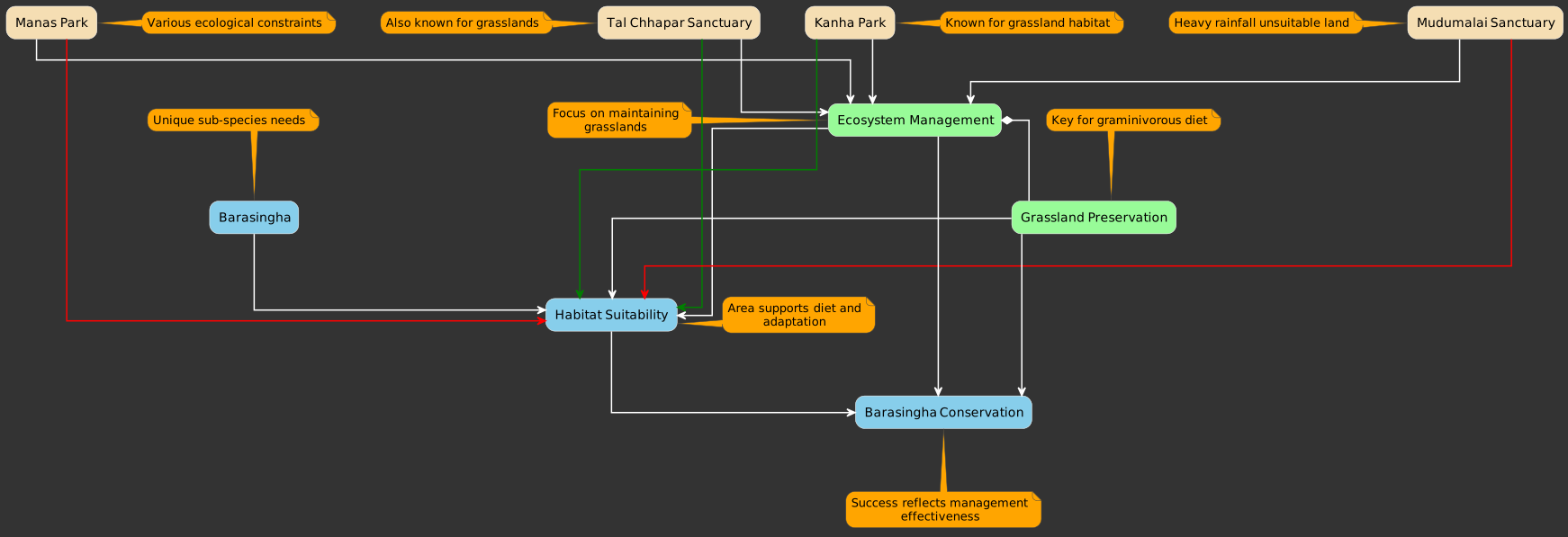
Kanha National Park, located in Madhya Pradesh, is widely recognized for its significant role in the conservation of the hard ground Barasingha (Rucervus duvaucelii branderi), a distinct sub-species of the Indian swamp deer. Unlike its counterparts that prefer swampy grasslands, the hard ground Barasingha thrives in the dry, open grasslands typical of Kanha. It is also exclusively graminivorous, meaning it feeds solely on grasses.
Kanha National Park successfully brought this sub-species back from the brink of extinction through dedicated conservation efforts, making it a prime example of successful wildlife management.
Manas National Park (Assam): Known for its tigers, rhinos, and wild buffalo, but not specifically for hard ground Barasingha.
Mudumalai Wildlife Sanctuary (Tamil Nadu): Part of the Nilgiri Biosphere Reserve, known for elephants, tigers, and a wide variety of other fauna, but not the hard ground Barasingha.
Tal Chhapar Wildlife Sanctuary (Rajasthan): Known for its Blackbucks.
CStrategy
For questions on wildlife conservation and protected areas, it is important to know which specific animals or unique sub-species are famously conserved in particular national parks or sanctuaries, especially if they represent a unique ecological niche or successful conservation story.
DSyllabus Analysis
This question falls under Environment & Ecology, specifically focusing on National Parks, Wildlife Sanctuaries, and species-specific conservation efforts in India.
EQuestion Analysis
Medium. It requires specific knowledge about the conservation programs associated with particular national parks in India.