
Question 23
AOptions
BSolution
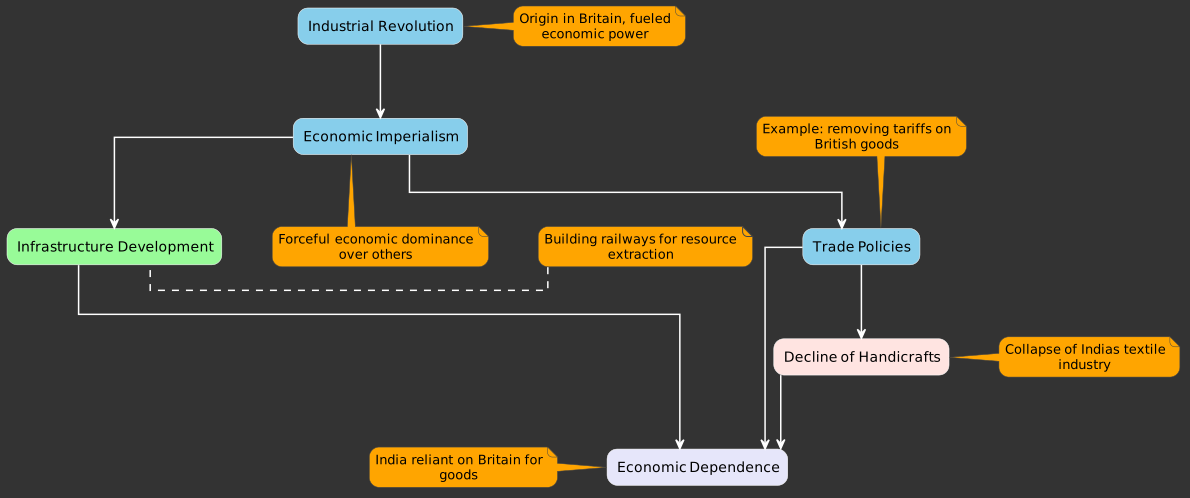
The first half of the nineteenth century (roughly 1800-1850) witnessed the significant impact of the Industrial Revolution in Britain on India, primarily leading to the economic subjugation of the Indian subcontinent. Among the given options, the most direct and devastating impact was on India's indigenous industries:
A) Indian handicrafts were ruined. This statement is correct. The Industrial Revolution transformed Britain into a manufacturing hub. The East India Company's policies (and later the British Crown's) were designed to make India a source of raw materials for British industries and a market for British manufactured goods. Cheap, machine-made British textiles and other goods flooded the Indian market, and these goods were imported at negligible or no duties. In contrast, Indian manufactured goods faced high tariffs when exported to Britain. This unequal trade policy and the superior efficiency of machine production led to the decline and eventual ruin of India's once-flourishing handicraft industries, especially cotton textiles, displacing millions of artisans and weavers.
Let's analyze why other options are less accurate for the *first half* of the 19th century:
- B) Machines were introduced in the Indian textile industry in large numbers. This happened predominantly in the latter half of the 19th century. The first successful cotton textile mill in Bombay was established in 1854, marking the beginning of modern industrialization in India, which is outside the first half of the century.
- C) Railway lines were laid in many parts of the country. Significant railway construction in India began in the 1850s, with the first railway line opening in 1853 (Bombay to Thane). So, this impact falls primarily in the latter half of the 19th century.
- D) Heavy duties were imposed on the imports of British manufactures. This statement is incorrect. The British government and the East India Company ensured that British manufactured goods could be imported into India with very low or no tariffs, making them competitive against Indian goods. Conversely, heavy duties were imposed on Indian manufactured goods exported to Britain.
Thus, the ruin of Indian handicrafts was the most significant and defining impact of the Industrial Revolution on India during the first half of the nineteenth century.
CStrategy
For questions on the impact of major historical events like the Industrial Revolution, focus on the immediate and direct consequences, and pay close attention to the specified time period. Distinguish between cause and effect, and avoid anachronisms or impacts that occurred later in history.
DSyllabus Analysis
This question falls under the Modern Indian History section, specifically focusing on the economic impact of British rule and colonial policies on India's indigenous industries.
EQuestion Analysis
Easy to Medium. This is a fairly well-known fact about the economic exploitation of India by the British, but the specific time period (first half of 19th century) requires careful consideration.