
Question 16
AOptions
BSolution
The status of the Preamble to the Constitution of India has been a subject of judicial interpretation. The Supreme Court's stance evolved over time:
- Berubari Union case (1960): The Supreme Court held that the Preamble is not a part of the Constitution.
- Kesavananda Bharati case (1973): This landmark judgment reversed the earlier decision and held that the Preamble is indeed a part of the Constitution.
However, the Court also clarified the nature of the Preamble's legal effect:
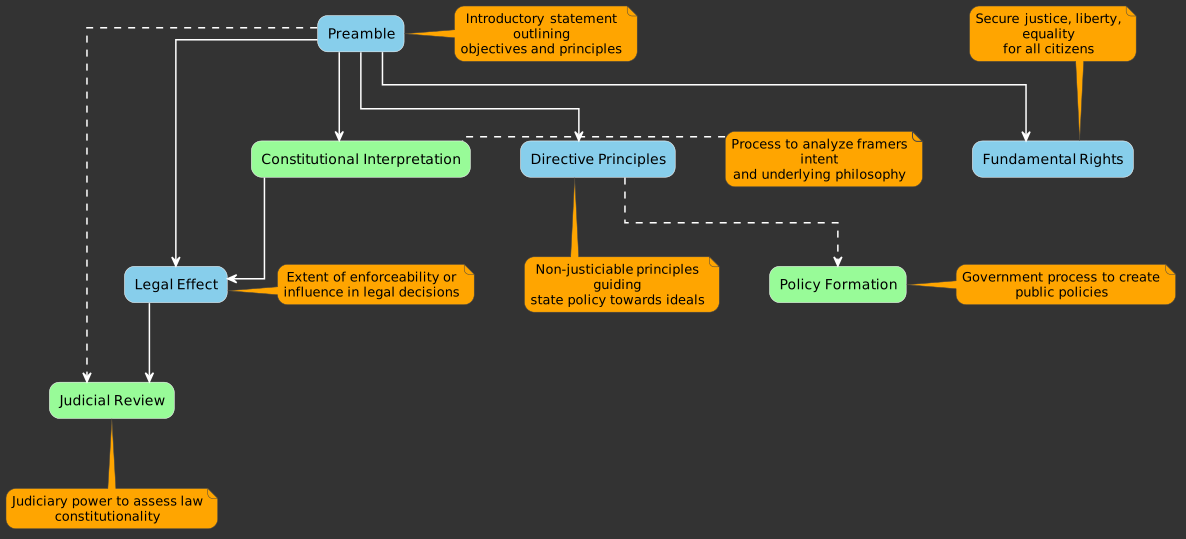
- The Preamble is not a source of power to the legislature or a source of prohibition upon the powers of the legislature. This means it cannot grant or deny powers on its own.
- It is not enforceable in any court of law independently. You cannot go to court to enforce a right solely based on the Preamble.
- Its significance lies in its role as an aid to the interpretation of the Constitution. It embodies the fundamental values and philosophy on which the Constitution is based. In case of any ambiguity in the provisions of the Constitution, the Preamble provides a key to understanding the intent of the framers.
Therefore, the most accurate description is that the Preamble is a part of the Constitution but has no legal effect independently of other parts.
CStrategy
For questions on foundational constitutional elements like the Preamble, understand their legal status as determined by Supreme Court judgments. Differentiate between being a 'part' of the Constitution and having independent 'legal effect' or enforceability. Remember that the Preamble serves as an interpretive guide.
DSyllabus Analysis
This question falls under the Indian Polity section, specifically focusing on the basic features and interpretation of the Indian Constitution, including the Preamble.
EQuestion Analysis
Medium. While the 'part of the Constitution' aspect is well-known, the nuance of 'no legal effect independently' is crucial and can be tricky for candidates.