
Question 32
1. women's right to gain education
2. age of consent
3. restitution of conjugal rights
Select the correct answer using the code given below:
AOptions
BSolution
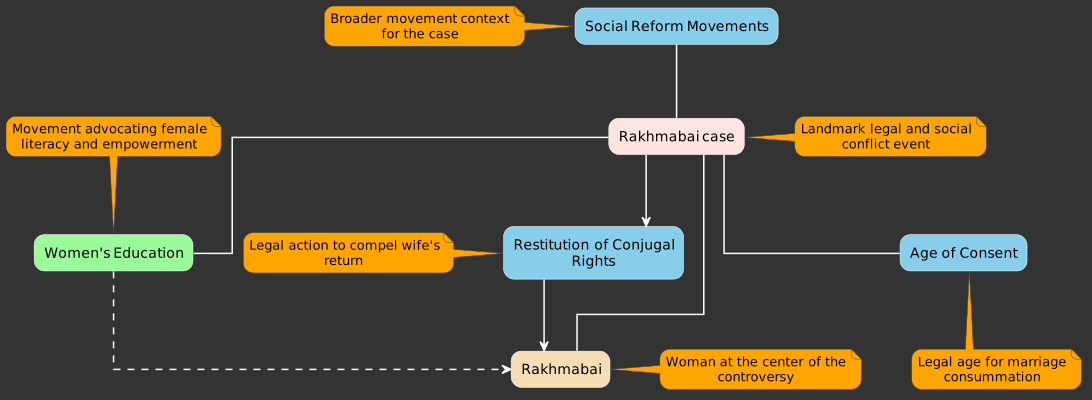
The Rakhmabai case of 1884 was a landmark legal case in colonial India that brought to the forefront significant social issues, primarily concerning women's rights within marriage. The case revolved around two main issues: Statement 2, the 'age of consent' for marriage, as Rakhmabai had been married as a child and refused to live with her husband upon reaching maturity. Statement 3, 'restitution of conjugal rights', which was the legal demand made by her husband for her to return and fulfill her marital duties. The case sparked widespread debate and played a crucial role in the eventual enactment of the Age of Consent Act, 1891. While 'women's right to gain education' (Statement 1) was a broader social reform movement and a long-term aspiration, it was not the specific legal issue at the heart of the Rakhmabai case itself. The immediate legal dispute centered on her marriage and marital obligations.
CStrategy
When examining historical legal cases or social reform movements, it is important to identify the precise issues and legal principles that were debated or challenged. While related broader issues might exist, the question often asks for the specific points of contention in that particular case.
DSyllabus Analysis
This question falls under Modern Indian History, specifically focusing on social reforms, women's issues, and landmark legal cases during the British Raj.
EQuestion Analysis
Medium to Difficult. Requires specific knowledge of the details of a particular historical legal case and its core issues.