
Question 57
1. Cut and optimize the Statutory Liquidity Ratio
2. Increase the Marginal Standing Facility Rate
3. Cut the Bank Rate and Repo Rate
Select the correct answer using the code given below:
AOptions
BSolution
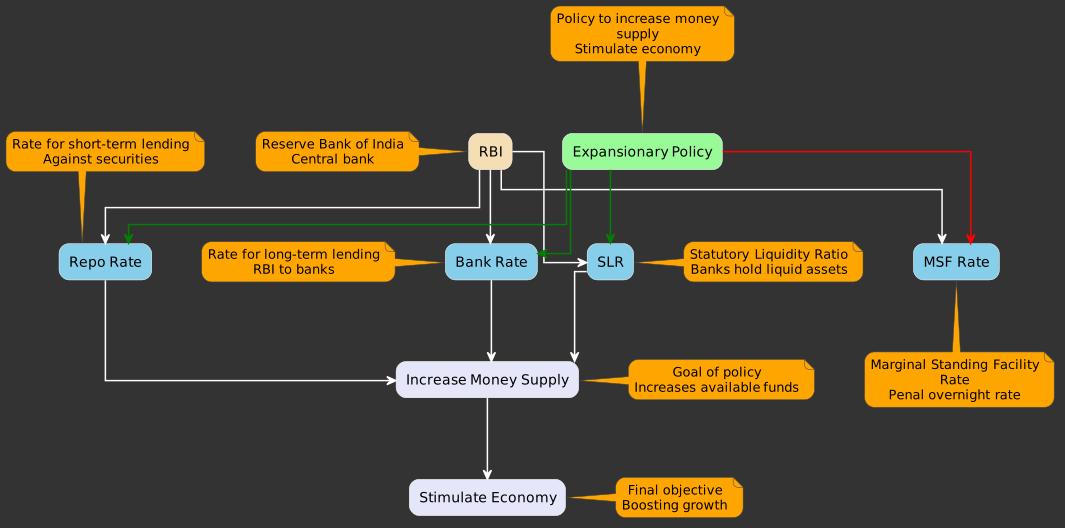
An expansionist monetary policy aims to increase the money supply in the economy, lower interest rates, and stimulate economic growth. The Reserve Bank of India (RBI) uses various tools to achieve this:
1. Cut and optimize the Statutory Liquidity Ratio (SLR): Cutting the SLR reduces the proportion of deposits that commercial banks must hold in the form of liquid assets (like government securities). This frees up more funds for banks to lend, thereby increasing credit availability and money supply. This is an expansionist measure.
2. Increase the Marginal Standing Facility (MSF) Rate: The MSF rate is the rate at which banks can borrow overnight funds from the RBI against approved government securities, in an emergency. Increasing the MSF rate makes such borrowing more expensive for banks, which discourages them from borrowing and reduces liquidity in the system. This is a contractionary monetary policy measure. Therefore, the RBI would *not* do this in an expansionist policy.
3. Cut the Bank Rate and Repo Rate: The Bank Rate is the rate at which the RBI lends money to commercial banks without any security. The Repo Rate is the rate at which banks borrow money from the RBI by selling securities with an agreement to repurchase them. Cutting these rates makes borrowing cheaper for commercial banks, which in turn encourages them to reduce their lending rates, leading to increased borrowing by businesses and individuals, thereby stimulating economic activity. These are expansionist measures.
The question asks what the RBI would *not* do as part of an expansionist monetary policy. Based on the analysis, increasing the MSF rate is a contractionary measure.
CStrategy
To tackle questions on monetary policy, clearly understand the purpose and effect of each tool (Repo Rate, MSF, SLR, Bank Rate, CRR). Be able to identify whether a change in a particular rate or ratio leads to expansion or contraction of the money supply and credit in the economy.
DSyllabus Analysis
This question is from the Indian Economy section, specifically focusing on Monetary Policy and the functions of the Reserve Bank of India.
EQuestion Analysis
Medium. Requires a clear and accurate understanding of how different monetary policy tools operate and their intended impact on the economy.