
Question 85
It is a measure, in monetary value, of the
AOptions
BSolution
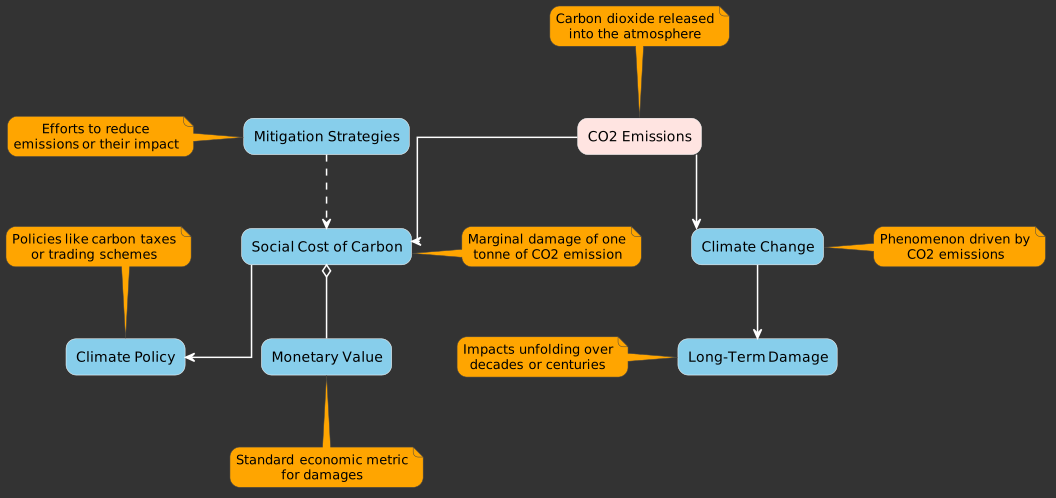
The term 'Social Cost of Carbon' (SCC) is an economic metric that attempts to quantify the full societal costs of emitting an additional tonne of carbon dioxide (CO2) into the atmosphere at any given time. It represents the monetary value of the total damage caused by that tonne of CO2 over its entire lifetime in the atmosphere, including impacts such as:
- Changes in agricultural productivity and food security
- Human health impacts (e.g., respiratory diseases, heat stress)
- Coastal property damage from sea-level rise
- Loss of ecosystem services and biodiversity
- Increased frequency and intensity of extreme weather events
- Disruption of water resources
The SCC is a critical tool used by policymakers to evaluate the economic benefits of policies that reduce greenhouse gas emissions. Option A accurately captures this comprehensive, long-term, monetary valuation of climate change damages associated with each unit of CO2 emitted. The other options describe different, related but distinct, concepts: B refers to national fossil fuel consumption, C refers to adaptation costs for climate refugees, and D refers to an individual's carbon footprint.
CStrategy
For questions that ask for the best description of a specific economic or environmental term, focus on the core concept and what it precisely quantifies or represents. Look for keywords that distinguish it from similar but different concepts. In this case, 'monetary value,' 'long-term damage,' and 'per tonne of CO2' are key.
DSyllabus Analysis
This question falls under Environment & Ecology and Economy, specifically climate change economics, environmental valuation, and carbon accounting.
EQuestion Analysis
Medium. It's a specific economic term related to climate change policy and impacts, which is part of the broader environmental economics discourse.