
Question 89
1. A substantial saving in seed material is made when 'bud chip settlings' are raised in a nursery and transplanted in the main field.
2. When direct planting of setts is done, the germination percentage is better with single-budded setts as compared to setts with many buds.
3. If bad weather conditions prevail when setts are directly planted, single-budded setts have better survival as compared to large setts.
4. Sugarcane can be cultivated using settlings prepared from tissue culture.
Which of the statements given above is/are correct?
AOptions
BSolution
Let's evaluate each statement concerning current trends in sugarcane cultivation in India:
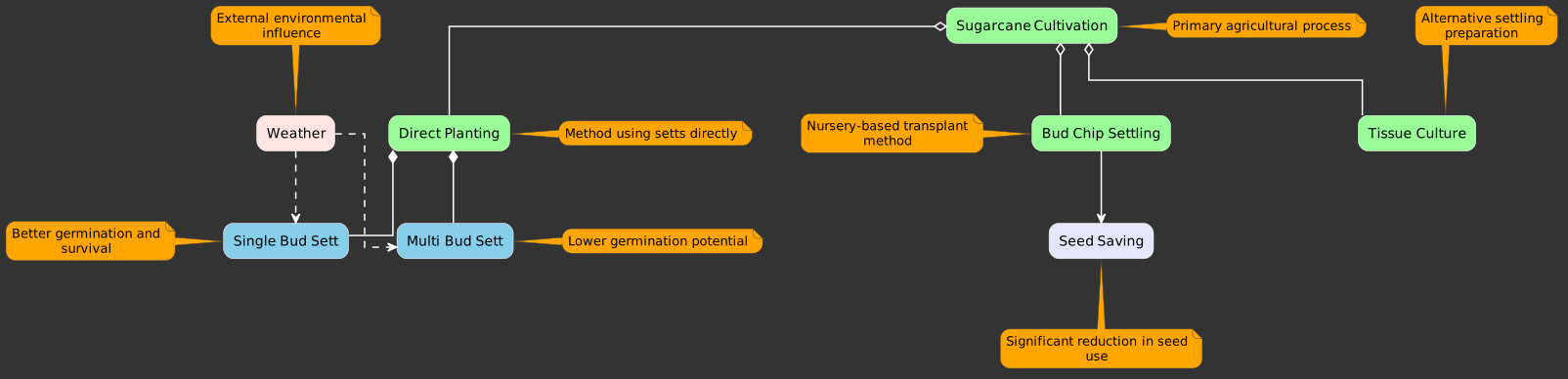
1. A substantial saving in seed material is made when 'bud chip settlings' are raised in a nursery and transplanted in the main field: This statement is correct. Bud chip technology involves extracting single buds from sugarcane stalks and raising them into settlings (plantlets) in a nursery. This method requires significantly less seed cane compared to the traditional practice of planting whole stalks or multi-budded setts, leading to substantial savings in seed material and associated transportation costs. These healthy settlings are then transplanted to the main field.
2. When direct planting of setts is done, the germination percentage is better with single-budded setts as compared to setts with many buds: This statement is incorrect. When setts are directly planted in the field, single-budded setts generally have a lower germination percentage and survival rate compared to two- or three-budded setts. Multi-budded setts contain more stored food reserves, which provide better nourishment for initial sprouting and offer greater resilience against adverse conditions. Single-bud chip technology is primarily effective when nursed under controlled conditions before transplanting.
3. If bad weather conditions prevail when setts are directly planted, single-budded setts have better survival as compared to large setts: This statement is incorrect. On the contrary, single-budded setts are more vulnerable to adverse weather conditions (like drought, excessive moisture, or temperature fluctuations), pest attacks, and diseases due to their limited food reserves and smaller size. Larger setts (with multiple buds) offer better survival chances and more robust initial growth under unfavorable conditions as they have more reserve energy and multiple growing points.
4. Sugarcane can be cultivated using settlings prepared from tissue culture: This statement is correct. Tissue culture is an advanced biotechnological method used for the rapid propagation of disease-free, genetically uniform, and high-quality planting material (settlings or plantlets) of sugarcane. This technology helps in producing healthy plants free from systemic diseases, leading to improved yields and better crop health. These tissue-cultured settlings are then transplanted to the field.
Therefore, statements 1 and 4 are correct.
CStrategy
For questions on agricultural practices and technologies, understand the practical implications and core benefits of each method. Focus on how advancements (like bud chip or tissue culture) aim to improve efficiency, reduce costs, or enhance crop health. Be careful with comparative statements, especially those that contradict basic biological principles (e.g., survival rates under stress).
DSyllabus Analysis
This question relates to Agriculture and Science & Technology, specifically crop cultivation practices, biotechnology in agriculture, and sustainable farming methods in the context of sugarcane.
EQuestion Analysis
Difficult. This question requires specific, detailed knowledge of modern sugarcane cultivation techniques, including the nuances of bud chip technology and tissue culture, and their comparative advantages/disadvantages.