
Question 81
AOptions
BSolution
The Wildlife (Protection) Act, 1972, provides for the protection of wild animals and plants. It categorizes species into various schedules based on their conservation status and the level of protection afforded to them.
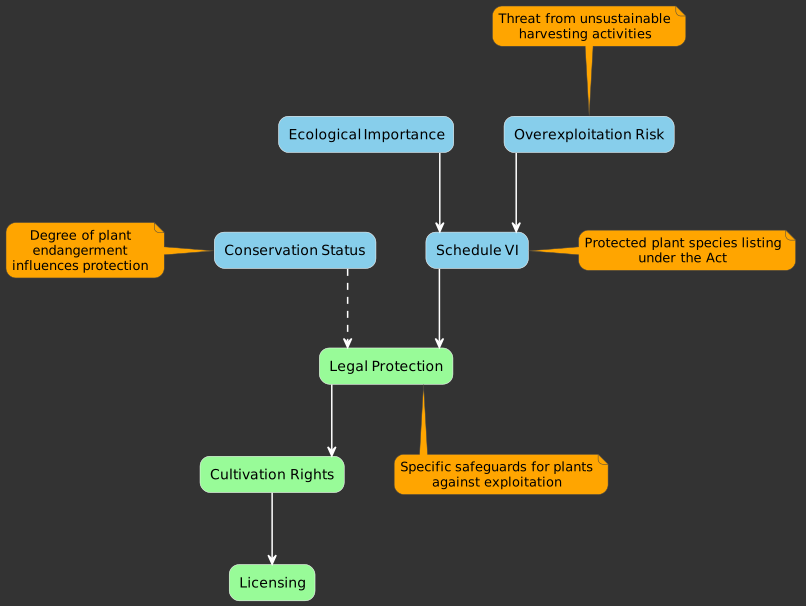
Schedule VI of the Wildlife (Protection) Act, 1972, lists specific plant species that are under special protection. For these plants, any cultivation, collection, extraction, transport, or trade requires a special license from the Chief Wildlife Warden or an authorized officer. This provision is primarily aimed at preventing the unregulated exploitation and trade of certain rare, endangered, or otherwise protected plant species.
Therefore, the implication of a plant species being placed under Schedule VI is that a license is required to cultivate that plant. It does not mean it cannot be cultivated under any circumstances (as a license is possible), nor does it imply that it is a Genetically Modified crop plant or an invasive and harmful species (though some invasive species might be regulated under other provisions, this is not the direct implication of Schedule VI).
CStrategy
For questions concerning specific acts, laws, or legal frameworks, it is crucial to understand the implications of different sections, clauses, or schedules. Memorizing the key provisions and their practical consequences, especially for important environmental and biodiversity conservation acts like the Wildlife Protection Act, is vital for UPSC Prelims.
DSyllabus Analysis
This question falls under Environment & Ecology and Indian Polity, specifically environmental legislation, conservation policies, and the Wildlife Protection Act, 1972.
EQuestion Analysis
Medium. This question requires specific knowledge of the provisions of the Wildlife (Protection) Act, 1972, particularly its Schedule VI, which is a factual detail often tested in environmental law.