
Question 51
AOptions
BSolution
Foreign Direct Investment (FDI) represents an investment by a foreign entity directly into productive assets or businesses in a host country. This usually involves establishing new facilities, expanding existing operations, or acquiring a significant ownership stake in a local company. Unlike loans or Foreign Portfolio Investment (FPI) in debt instruments, FDI primarily takes the form of equity investment. This means the foreign investor acquires ownership (shares) in the domestic entity, and the capital inflow does not create a repayment obligation for the host country or the recipient firm. Hence, it is considered a largely non-debt creating capital flow, as the returns to the investor are dependent on the profitability of the enterprise, rather than fixed interest payments.
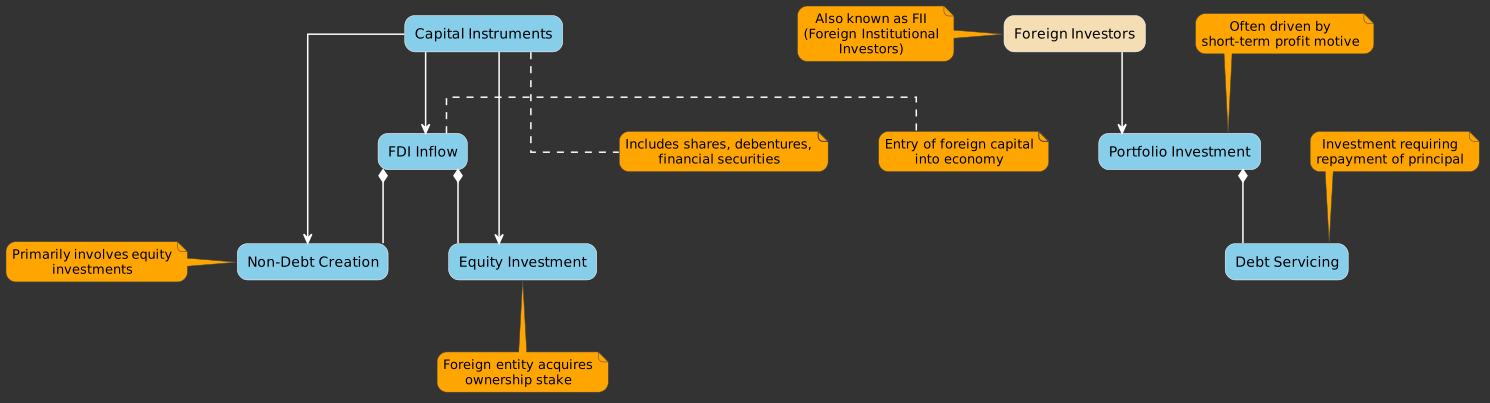
CStrategy
For economic concepts like Foreign Direct Investment, focus on understanding their fundamental definitions and key characteristics. Distinguish between different types of capital flows (e.g., FDI vs. FPI, debt vs. equity) and their implications for the economy. This often helps in eliminating incorrect options that describe other forms of investment or debt.
DSyllabus Analysis
This question pertains to the Indian Economy, specifically topics related to capital markets, foreign trade, and balance of payments, focusing on the nature of foreign investments.
EQuestion Analysis
Easy. This is a direct conceptual question requiring a clear understanding of the basic nature of Foreign Direct Investment.