
Question 89
1. There is only one citizenship and one domicile.
2. A citizen by birth only can become the Head of State.
3. A foreigner once granted the citizenship cannot be deprived of it under any circumstances.
Which of the statements given above is/are correct?
AOptions
BSolution
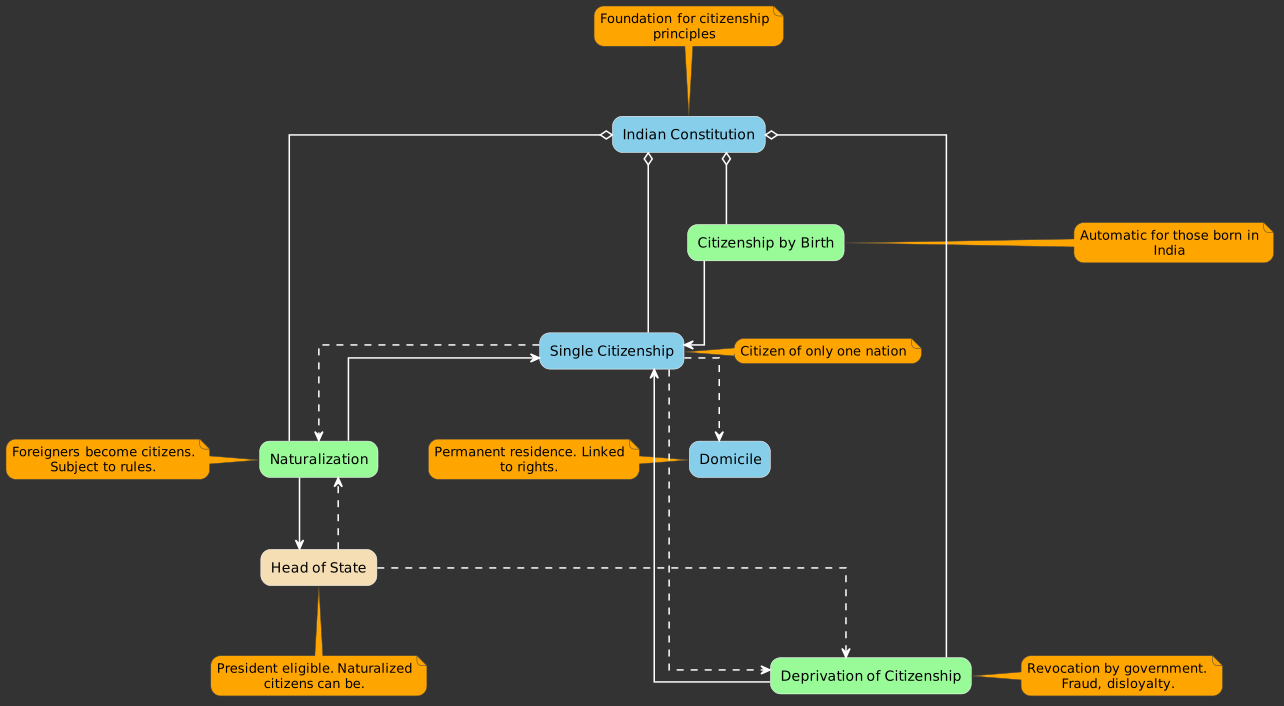
Statement 1 is correct. India adopts the system of single citizenship, meaning a person is a citizen of the entire country (India) and not of any particular state within India. Similarly, there is one domicile for the entire country.
Statement 2 is incorrect. In India, a person who acquires citizenship by naturalization or registration can also become the Head of State (President). There is no constitutional requirement that the President must be a citizen by birth, unlike in some countries (e.g., the USA).
Statement 3 is incorrect. A foreigner once granted Indian citizenship can indeed be deprived of it under certain circumstances, as laid down in the Citizenship Act, 1955. Grounds for deprivation include acquiring citizenship by fraud, disloyalty to the Constitution, or continuous residence outside India for a specified period.
CStrategy
For questions on citizenship, remember the core principles of Indian citizenship (single citizenship), the methods of acquisition and loss, and specific qualifications for high constitutional offices. Pay close attention to absolute terms like 'only' or 'under any circumstances' as they often indicate an incorrect statement.
DSyllabus Analysis
This question falls under Indian Polity, covering the concept of Citizenship and relevant constitutional provisions and laws (Citizenship Act, 1955).
EQuestion Analysis
Medium. It requires specific knowledge of Indian citizenship laws and constitutional provisions for key offices.