
Question 83
1. When a prisoner makes out a sufficient case, parole cannot be denied to such prisoner because it becomes a matter of his/her right.
2. State Governments have their own Prisoners Release on Parole Rules.
Which of the statements given above is/are correct?
AOptions
BSolution
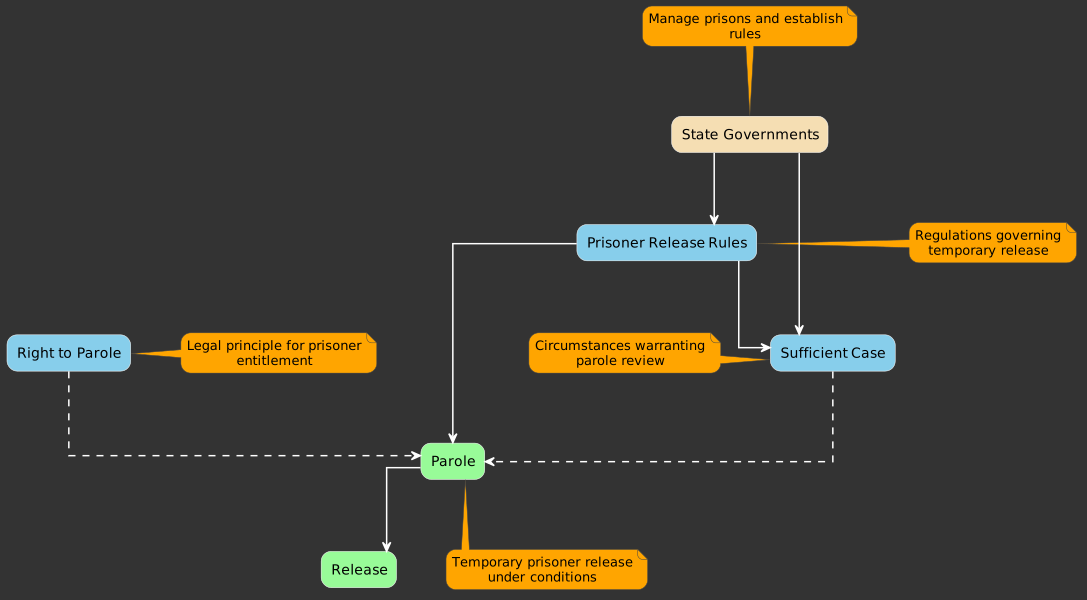
Statement 1 is incorrect. Parole is a form of conditional release granted to a prisoner, but it is a concession and not an absolute right. While a prisoner can make a case for parole, the authorities have discretion to grant or deny it based on various factors, including the prisoner's conduct, the nature of the crime, public safety, and administrative considerations. It does not become a matter of his/her 'right' even if a sufficient case is made out.
Statement 2 is correct. 'Prisons' falls under the State List (Entry 4, List II of Seventh Schedule) of the Constitution. Therefore, State Governments have the authority to formulate their own 'Prisoners Release on Parole Rules' to govern the conditions and procedures for granting parole to prisoners within their jurisdiction. This leads to variations in parole rules across different states in India.
CStrategy
For questions on legal concepts, especially those related to criminal justice and federal structure, distinguish between what constitutes a 'right' and what is a 'concession' or 'discretionary power'. Also, ascertain whether the subject falls under the Union, State, or Concurrent List to determine legislative authority.
DSyllabus Analysis
This question pertains to Indian Polity and Governance, specifically the Criminal Justice System, Prison Administration, and the Federal Structure (State List).
EQuestion Analysis
Medium. It requires specific knowledge about the nature of parole and the division of legislative powers under the Indian Constitution.