
Question 68
1. Area of the hole in the lid
2. Temperature of the flame
3. Weight of the lid
Select the correct answer using the code given below.
AOptions
BSolution
A pressure cooker works by sealing the cooking pot, trapping steam, and allowing pressure to build up. This increased pressure raises the boiling point of water, enabling food to cook at a higher temperature than the normal boiling point (100°C).
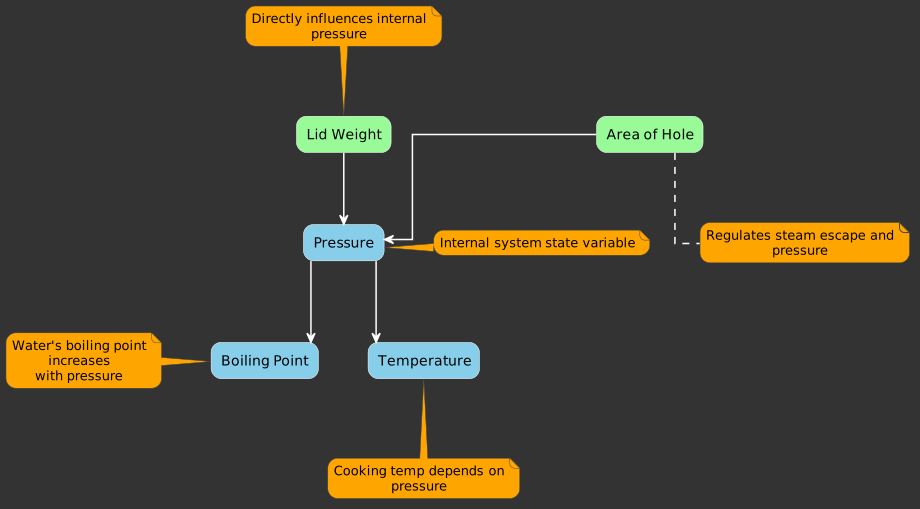
- 1. Area of the hole in the lid: The 'hole in the lid' refers to the vent pipe where the pressure regulator (weight) sits. The cross-sectional area of this hole (vent pipe diameter) influences the rate at which steam can escape. Along with the weight on top, it dictates the maximum pressure that can build inside. A larger hole might not allow sufficient pressure buildup, thus affecting the maximum temperature.
- 2. Temperature of the flame: The temperature of the flame determines the *rate* at which heat is supplied to the cooker, and thus how quickly the water boils and pressure builds. However, once the pressure regulator engages, the *maximum steady-state temperature* inside the cooker is determined by the pressure, not directly by the flame's temperature (as long as sufficient heat is provided to maintain boiling).
- 3. Weight of the lid: The weight of the pressure regulator (often a weight placed on the vent pipe) directly determines the maximum pressure that can be sustained inside the cooker. A heavier weight allows for a higher pressure to build before steam is released, which in turn leads to a higher boiling point of water and thus a higher cooking temperature.
Therefore, the area of the hole (vent pipe) and the weight of the lid (pressure regulator) are the primary factors influencing the maximum temperature at which food is cooked in a pressure cooker.
CStrategy
For questions on everyday science principles, relate the concepts to fundamental physics (pressure, boiling point, heat transfer). Understand how different components of a device contribute to its function. Distinguish between factors that affect the *rate* of a process versus those that determine its *maximum achievable state*.
DSyllabus Analysis
This question falls under General Science (Physics), specifically Heat and Pressure.
EQuestion Analysis
Medium. While the weight of the lid is intuitive, the role of the hole's area might require a slightly deeper understanding of pressure cooker mechanics.