
Question 92
AOptions
BSolution
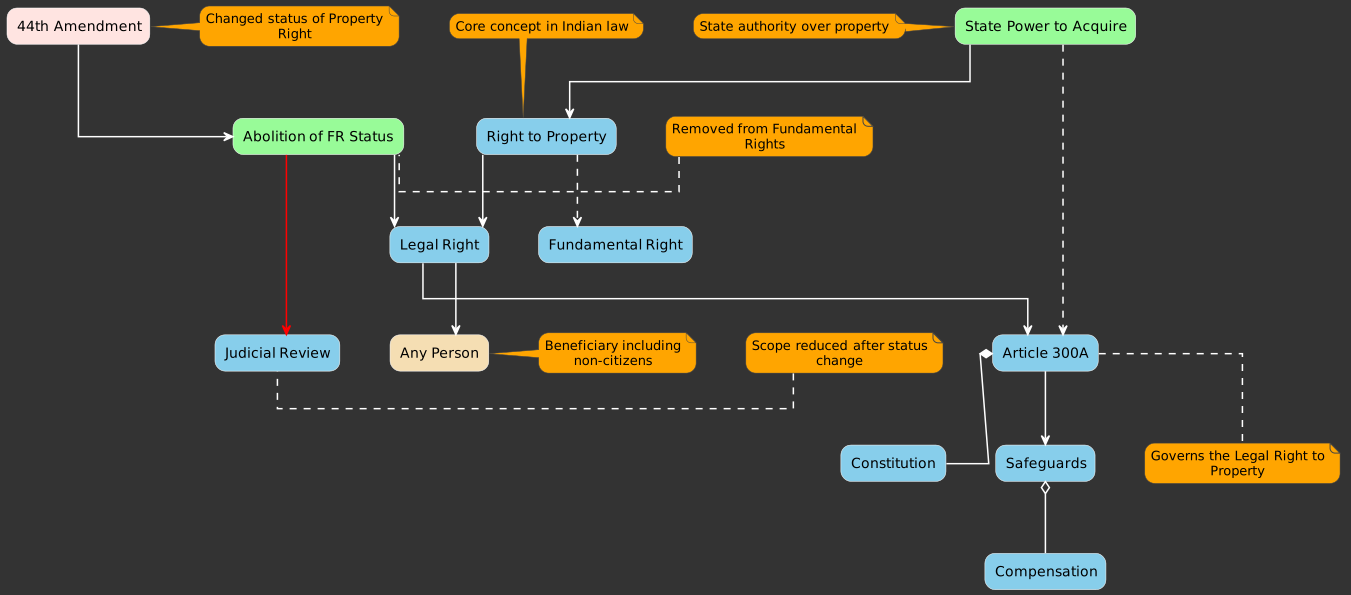
Originally, the Right to Property was a Fundamental Right under Article 31 and Article 19(1)(f). However, it was removed from the list of Fundamental Rights by the 44th Amendment Act of 1978. It was then shifted to Part XII of the Constitution and made a legal right under Article 300A. As a legal right under Article 300A, it is available to 'any person', meaning both citizens and non-citizens (juridical persons like companies) can exercise this right, though it can be regulated by ordinary law and does not automatically lead to compensation upon deprivation unless explicitly provided by law.
CStrategy
For questions on fundamental rights, it's crucial to know their historical evolution, especially significant amendments like the 44th Amendment that altered their status. Also, distinguish between rights available only to citizens and those available to all persons.
DSyllabus Analysis
This question falls under Indian Polity, covering Fundamental Rights, Constitutional Amendments, and the distinction between fundamental and legal rights.
EQuestion Analysis
Easy. The status of the Right to Property is a frequently discussed and fundamental topic in Indian Polity.