
Question 12
1. Expansionary policies
2. Fiscal stimulus
3. Inflation-indexing wages
4. Higher purchasing power
5. Rising interest rates
Select the correct answer using the code given below.
AOptions
BSolution
Demand-pull inflation occurs when aggregate demand in an economy outpaces the aggregate supply of goods and services, leading to a rise in prices.
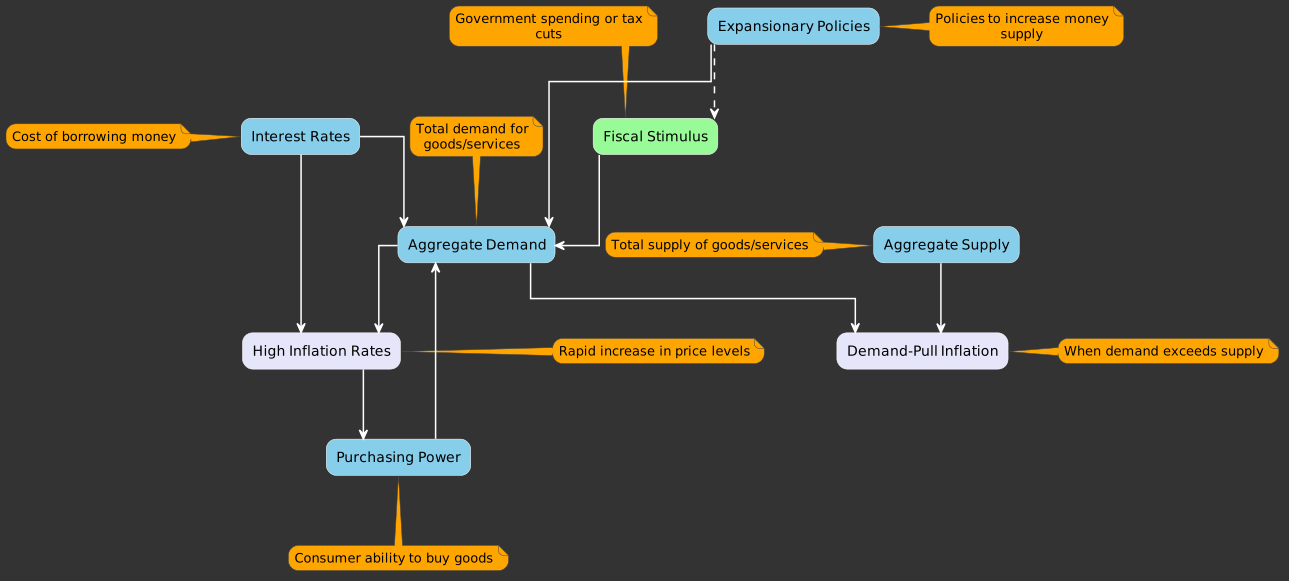
1. Expansionary policies: Both expansionary fiscal policies (e.g., increased government spending, tax cuts) and expansionary monetary policies (e.g., lower interest rates, increased money supply) aim to stimulate aggregate demand. When demand increases significantly beyond the economy's productive capacity, it leads to demand-pull inflation. This is correct.
2. Fiscal stimulus: A fiscal stimulus package, which involves increased government spending or tax cuts, directly injects money into the economy and boosts aggregate demand. This can certainly cause or increase demand-pull inflation if not managed properly. This is correct.
3. Inflation-indexing wages: Inflation-indexing wages means that wages automatically adjust upwards with inflation. This is typically a response to existing inflation, aimed at protecting the real income of workers. While it can contribute to a wage-price spiral (a type of cost-push inflation) and perpetuate inflation, it's not a primary cause of demand-pull inflation stemming from an initial excess of aggregate demand. This is incorrect as a primary cause of demand-pull inflation.
4. Higher purchasing power: When consumers have higher purchasing power (e.g., due to increased incomes, easier credit), they tend to demand more goods and services. If this increased demand cannot be met by the existing supply, it will push prices up, leading to demand-pull inflation. This is correct.
5. Rising interest rates: Rising interest rates are a contractionary monetary policy tool used by central banks to curb inflation. Higher interest rates make borrowing more expensive, discouraging investment and consumption, thereby reducing aggregate demand. Therefore, rising interest rates would tend to reduce, not cause or increase, demand-pull inflation. This is incorrect.
Hence, factors 1, 2, and 4 can cause or increase demand-pull inflation.
CStrategy
To analyze causes of inflation, distinguish clearly between demand-side and supply-side factors. Demand-pull inflation stems from excessive aggregate demand. Focus on policies and conditions that directly boost spending and consumption in the economy.
DSyllabus Analysis
This question belongs to the Indian Economy section, specifically covering the topic of Inflation (types and causes) and the impact of Fiscal and Monetary Policies.
EQuestion Analysis
Medium. It requires a clear understanding of the concept of demand-pull inflation and how various economic factors and policies influence aggregate demand.