
Question 11
AOptions
BSolution
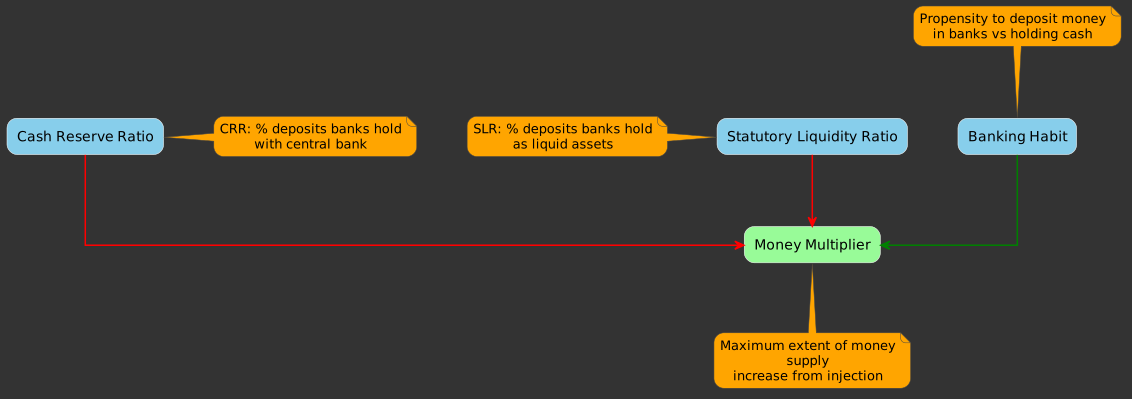
The money multiplier indicates how much the money supply changes for a given change in reserves. It is largely determined by two main factors:
1. Reserve Ratios (CRR and SLR): The higher the reserve requirements (Cash Reserve Ratio - CRR, and Statutory Liquidity Ratio - SLR) imposed on banks by the central bank, the less money banks have available to lend out. This reduces their credit creation capacity, and thus decreases the money multiplier. Therefore, an increase in CRR or SLR would decrease the money multiplier.
2. Public's Currency Holding (Banking Habit): If people have a greater banking habit, they tend to deposit more of their cash into banks rather than holding it as physical currency. When cash is deposited in banks, it becomes part of the banking system's reserves, enabling banks to create more credit (subject to reserve requirements) through the fractional reserve banking system. This increased flow of deposits through the banking system amplifies the money creation process, thereby increasing the money multiplier.
Option A (Increase in the Cash Reserve Ratio in the banks) would decrease the money multiplier.
Option B (Increase in the Statutory Liquidity Ratio in the banks) would decrease the money multiplier.
Option D (Increase in the population of the country) does not directly or inherently increase the money multiplier. While it might lead to a larger economy, it doesn't automatically alter the factors that determine the multiplier's value.
Therefore, an increase in the banking habit of the people would increase the money multiplier.
CStrategy
To solve questions on the money multiplier, understand its relationship with reserve ratios (inverse) and the public's preference for holding cash versus deposits (inverse to cash holding, direct to banking habit). The core idea is how much of the initial deposit can circulate and be re-lent in the banking system.
DSyllabus Analysis
This question is from the Indian Economy syllabus, specifically focusing on the Monetary System, Money Supply, and the functioning of the Banking Sector.
EQuestion Analysis
Medium. It requires a clear understanding of the concept of the money multiplier and the factors that influence it.