
Question 17
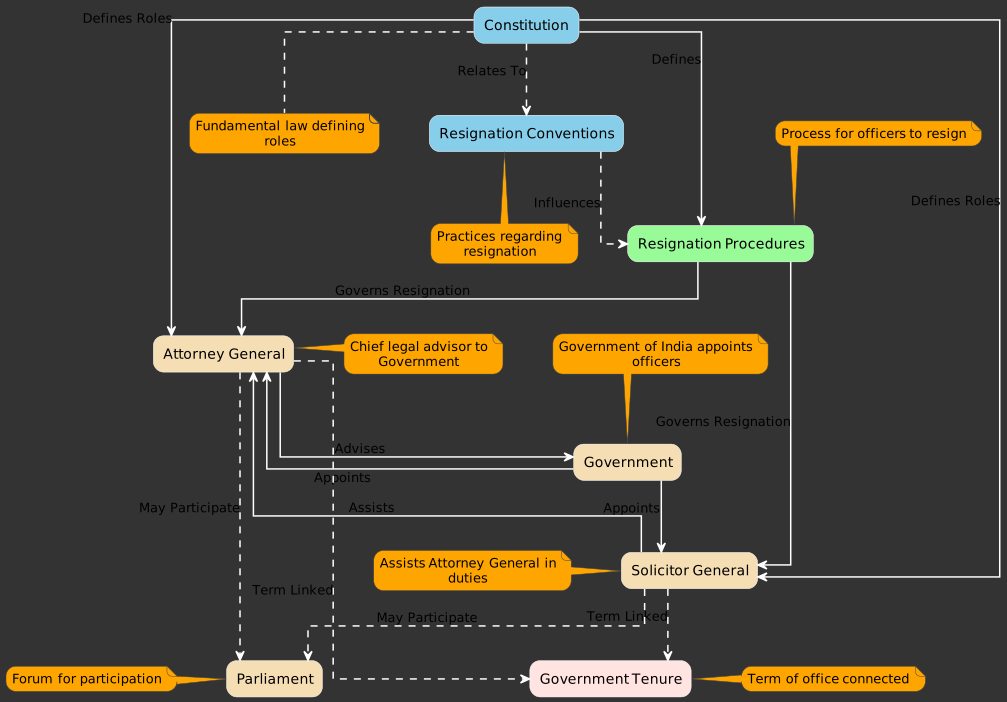
1. Attorney General of India and Solicitor General of India are the only officers of the Government who are allowed to participate in the meetings of the Parliament of India.
2. According to the Constitution of India, the Attorney General of India submits his resignation when the Government which appointed him resigns.
Which of the statements given above is/are correct?
AOptions
BSolution
Let's analyze the statements regarding the Attorney General of India and Solicitor General of India:
1. Attorney General of India and Solicitor General of India are the only officers of the Government who are allowed to participate in the meetings of the Parliament of India: Article 88 of the Constitution grants the Attorney General for India the right to speak in, and otherwise to take part in the proceedings of, either House, any joint sitting of the Houses, and any committee of Parliament of which he may be named a member, but without a right to vote. However, the Solicitor General of India and Additional Solicitors General are law officers who assist the Attorney General, but they do not have the right to participate in parliamentary proceedings. Therefore, statement 1 is incorrect.
2. According to the Constitution of India, the Attorney General of India submits his resignation when the Government which appointed him resigns: The Attorney General holds office during the pleasure of the President (Article 76(4)). While it is a well-established convention that the Attorney General resigns when the government (Council of Ministers) that appointed him resigns, this is a convention, not a constitutional mandate. The Constitution does not explicitly state that the AG must resign when the government changes. Therefore, statement 2 is incorrect.
CStrategy
For questions on constitutional functionaries, distinguish between constitutional provisions, statutory provisions, and well-established conventions. Understand the specific rights, duties, and conditions of service for each office.
DSyllabus Analysis
This question falls under Indian Polity, specifically the Union Executive, Parliament, and Constitutional provisions regarding various offices.
EQuestion Analysis
Medium. It tests specific knowledge about constitutional offices and parliamentary participation.