
Question 15
1. To ratify the declaration of Emergency
2. To pass a motion of no-confidence against the Council of Ministers
3. To impeach the President of India
Select the correct answer using the code given below:
AOptions
BSolution
Let's examine which of the given powers are exclusive to the Lok Sabha:
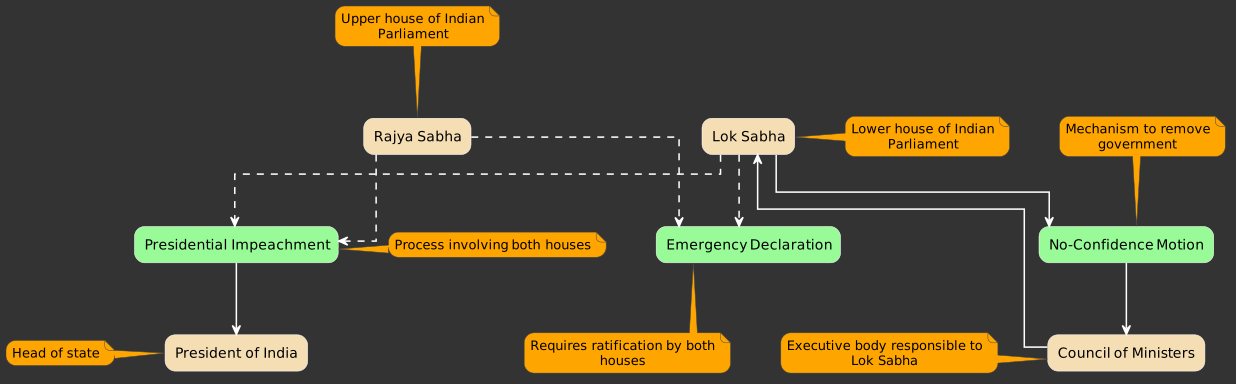
1. To ratify the declaration of Emergency: A proclamation of emergency (National, State, or Financial) must be approved by resolutions of both Houses of Parliament (Lok Sabha and Rajya Sabha). It is not an exclusive power of the Lok Sabha. Therefore, statement 1 is incorrect.
2. To pass a motion of no-confidence against the Council of Ministers: Under Article 75(3) of the Constitution, the Council of Ministers is collectively responsible to the House of the People (Lok Sabha). Therefore, a motion of no-confidence can only be moved and passed in the Lok Sabha. If passed, the Council of Ministers must resign. This is an exclusive power of the Lok Sabha. Therefore, statement 2 is correct.
3. To impeach the President of India: The impeachment process for the President can be initiated in either House of Parliament. The resolution for impeachment needs to be passed by a special majority in the House where it is initiated and then sent to the other House for investigation and passing by a special majority. It is not an exclusive power of the Lok Sabha. Therefore, statement 3 is incorrect.
CStrategy
To answer questions on the powers of Parliament, understand the distinct roles and exclusive powers of Lok Sabha and Rajya Sabha. Key areas to focus on include Money Bills, no-confidence motions, emergency provisions, and impeachment processes.
DSyllabus Analysis
This question falls under Indian Polity, specifically Parliament, powers of the Lok Sabha, and its relationship with the executive.
EQuestion Analysis
Easy to Medium. It tests a fundamental understanding of parliamentary procedures and powers.