
Question 48
1. Alfalfa
2. Amaranth
3. Chickpea
4. Clover
5. Purslane (Kulfa)
6. Spinach
Select the correct answer using the code given below:
AOptions
BSolution
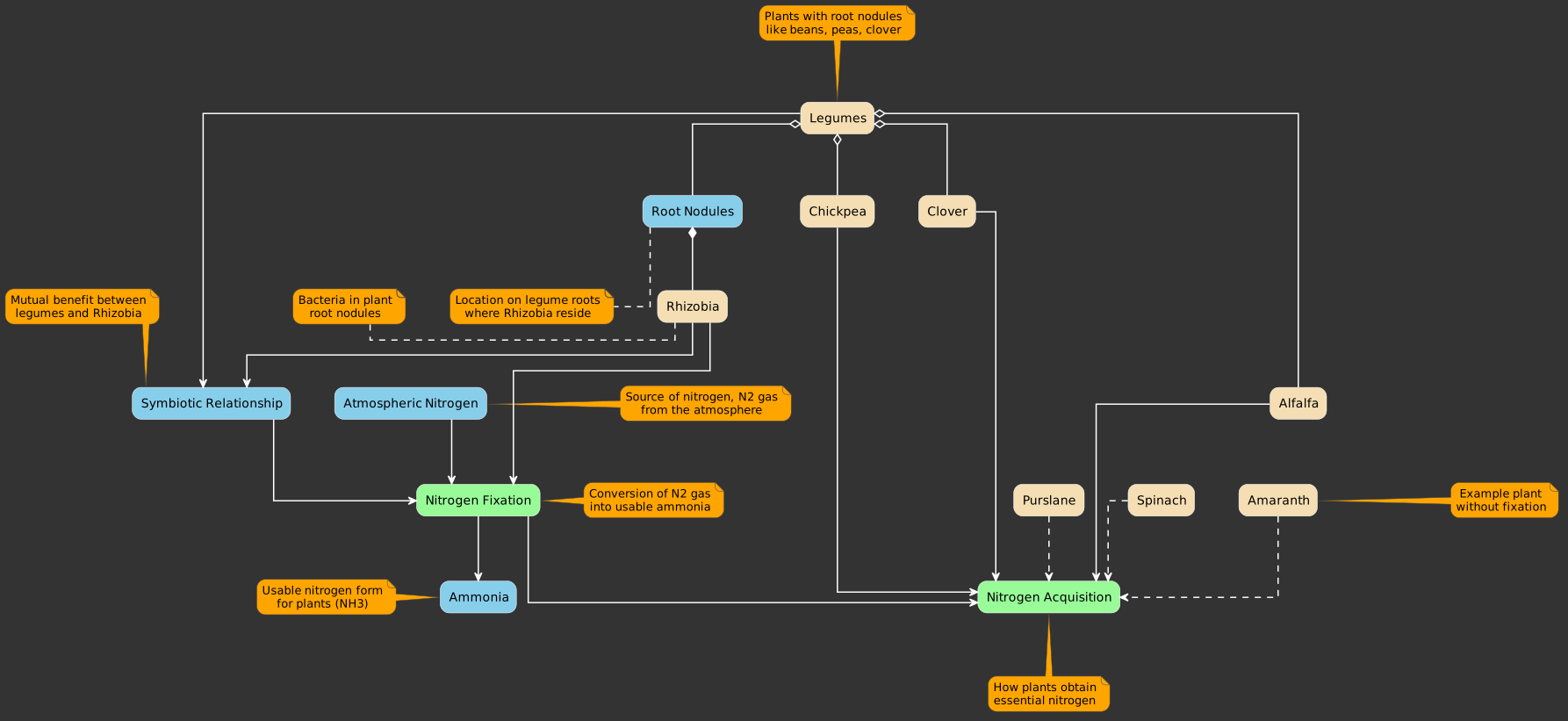
Nitrogen-fixing plants are those that can convert atmospheric nitrogen (N2) into ammonia (NH3) through a symbiotic relationship with nitrogen-fixing bacteria, primarily Rhizobium bacteria living in root nodules. These are typically legumes. Let's examine the given plants:
1. Alfalfa: Correct. Alfalfa (Medicago sativa) is a leguminous forage crop widely known for its ability to fix atmospheric nitrogen, significantly improving soil fertility.
2. Amaranth: Incorrect. Amaranth (Amaranthus spp.) is a leafy vegetable and grain crop. It is not a legume and does not fix nitrogen. It is known for being a high-nitrogen feeder.
3. Chickpea: Correct. Chickpea (Cicer arietinum) is a well-known legume and a pulse crop. Like other legumes, it forms a symbiotic relationship with nitrogen-fixing bacteria in its root nodules.
4. Clover: Correct. Clover (Trifolium spp.) is a common leguminous cover crop and forage plant widely used in agriculture for its nitrogen-fixing capabilities and soil improvement benefits.
5. Purslane (Kulfa): Incorrect. Purslane (Portulaca oleracea) is a succulent leafy vegetable. It is not a legume and does not fix nitrogen.
6. Spinach: Incorrect. Spinach (Spinacia oleracea) is a leafy green vegetable. It is not a legume and is known for being a heavy feeder of nitrogen from the soil, rather than fixing it.
Therefore, Alfalfa, Chickpea, and Clover are nitrogen-fixing plants.
CStrategy
For questions on biological processes in agriculture or environment, understand the key concepts like nitrogen fixation and identify common examples. Focus on identifying leguminous plants, as they are the primary group associated with nitrogen fixation. Review basic botany and ecological roles of common crops and wild plants.
DSyllabus Analysis
This question falls under Environment & Ecology (Biogeochemical Cycles, Ecosystems) and Agriculture (Crop Production, Soil Health).
EQuestion Analysis
Medium. Requires specific biological knowledge about nitrogen-fixing plants and distinguishing them from other common crops.